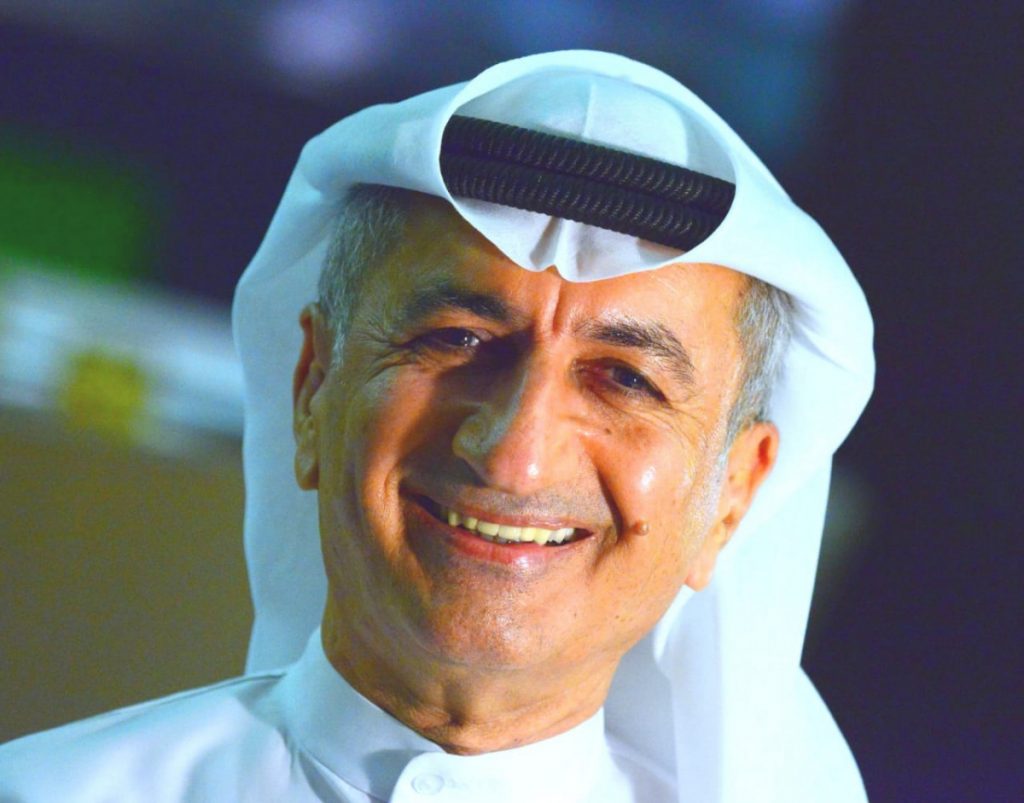
Down Memory Lane with Artist Rukni
Among the art community in the UAE, Rukni is a familiar name. Often spotted at exhibitions and events, the 63-year-old Emirati artist, who officially goes by the name Ahmad Al Awadhi is a connoisseur, patron and practitioner of art. A businessman by day, Rukni’s evenings are spent inaugurating art events and supporting budding artists.
As an artist, he is equally adept at landscapes and portraits, even as his current stream of work veers toward pop art. Apart from several exhibitions that he has showcased his work at, he is now collaborating with First Wish Art Gallery for a roving international art exhibition, that will travel to 12 countries. In this conversation with Middle East Masala, he looks back at the artistic inspirations that culminated into his oeuvre.

The Beginning
I always had an interest in art. At the age of eight, I was sketching palm trees and made portraits, but I never thought of pursuing art as a career. My father used to run a novelty store of gift items in Sharjah and by the time I was 16, I was actively part of the family business. Only around two decades ago, when I was around 40, a friend happened to visit my home and see my artwork. Her encouragement and appreciation led me to display them. That’s how I first publicly made a foray into the art world with an exhibition in Al Mamzar.
Art Style
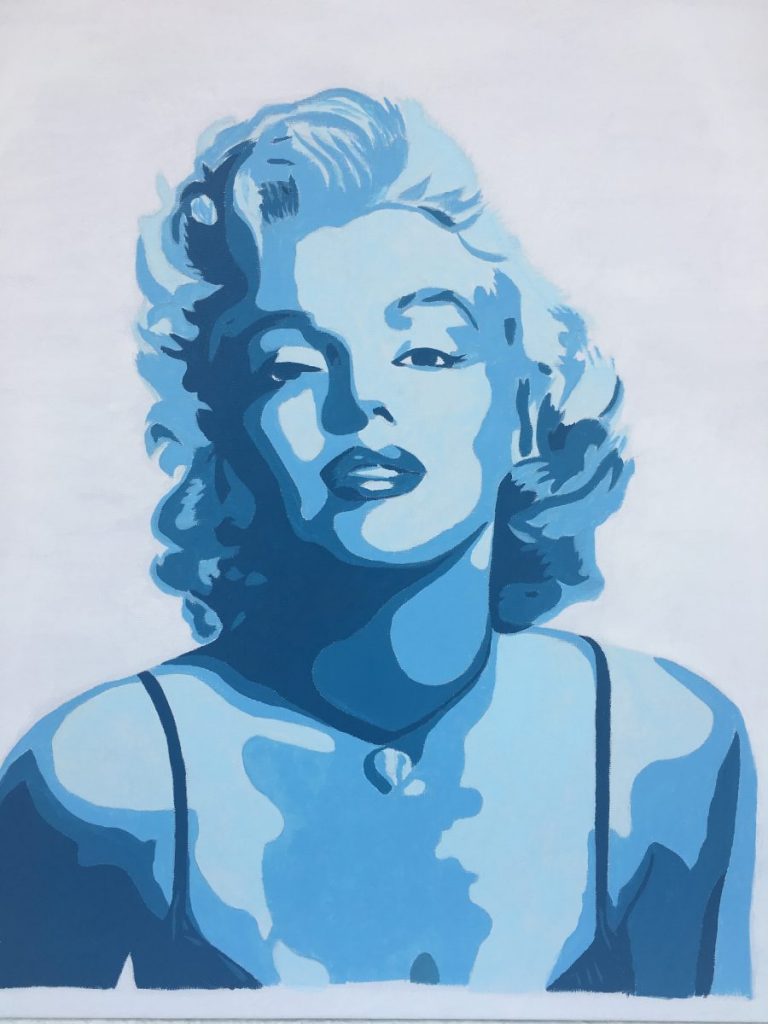
When I started painting, initially I would sketch what I saw around me — the traditional architecture of our bayts, the arches and doors, coffee pots, lanterns, mosques and desert scenes. But now I am more into portraits of legends that I paint in a pop art style. From Frida Kahlo to Sophia Loren, Al Pacino, Marilyn Monroe, Elvis Presley, Gandhi and Sheikh Zayed, I have etched them all. I closely watch their movies, flip through magazines and TV shows to get my portraits right. I usually paint very late at night, while listening to classical music. I can get deeply engrossed and sometimes spend the whole night painting.

Inspiration
Art is everything to me. I am entirely self-taught. When I started painting in my childhood, it was not appreciated. Now, of course, the scenario has changed, things are different. I receive a lot of love and respect from everyone. It’s important for me to preserve and present shades of my country and culture, which are intrinsic to me as an Emirati. Through my work, I hope that people will see the beauty of my nation.
The portraits that I make are an extension of my admiration for these iconic personalities. One of my most cherished art portraits is that of Pope Francis and the Grand Iman of Al Azhar, Ahmed el Tayeb, when they met in Abu Dhabi as part of UAE’s Year of Tolerance, 2019. That painting now adorns the walls of the office of the Ministry of Tolerance.
UAE’s Art Scene
In the UAE, we are fortunate to have the presence of several cultures intermingling. Artists from various parts of the world are based here. We can see elements of their culture in their artwork. I am inspired by the people I meet and their work. Young people have a lot more freedom to pursue what they want these days. They also have the encouragement of the UAE government. My own daughter has followed in my footsteps and is working with Louvre Abu Dhabi.
To Upcoming Artists
It is important to try various styles of art and figure out what one is excellent at. It should then become your forte, your specialization so that you can have your own signature style.
A multi-faceted artist, Petra Kaltenbach, fuses technology, graphic design, videography and fine art to create new-age contemporary art. Deeply perceptive and intuitive, she paints from a place of inner consciousness to portray the unseen on her canvas.
Born in Duisburg, Germany in 1962, Petra, one of the co-curators of World Art Dubai, moved to the UAE in 2004. Her new home in a rapidly changing city, then became a catalyst for her fascination with the theme of transformation. Captivated by the strength of the human spirit to break free from restricted psychological conditions into freedom and peace, she infuses a dose of optimism in her artworks. The pomegranate is a recurring motif on her canvas. As a symbol of transformation, for her, it is a divine fruit, that unites the east and the west and represents love, beauty, health and wealth.
Today she is known for her intertwined art — blending QR codes, UV printing technology with fine art. More recently, she has ventured into using augmented reality to combine videos into physical art and also taken on to work on mirrored stainless steel sheets. Jumping on the NFT bandwagon, she has just released her latest series called NFT_Love Letters. Ahead of World Art Dubai (Mar 16 to 19, 2022), she speaks to Middleeastmasala on her creative process.

Tell us about your new series, the NFT_LOVE LETTERS.
NFT_LOVE LETTERS, is a series of visual poems. They begin life as physical artworks painted and partially printed on mirrored stainless steel and then they take on their digital life with overlaid corresponding videos. The videos are transliterated Arabic terms of endearment, such as NUUR AIYNI_the light of my eyes, ALBI_my heart or ASAAL_Sweet like honey, engaging with the deep romanticism of the Arabic culture. I have used bright colours and a rush of patterns to create these visual love poems, which are a modern day ode to the timeless language of love.
From advertising to graphic design, to full time art and now curation — how did you transition from one field to the other? Or do you marry all your roles through your art?
Initially, I thought graphic design and art were very close. However, that was a mistake. While in graphic design, others define the rules, within which you have to be creative, in art you make your own. It’s a huge process. It’s a transformation that I am still undergoing.
With the big art movement of digitalization, graphic design is suddenly entering art. I call myself a hybrid artist, which means an artist who still creates physical works and videos to go with them. I have been doing this since 2015, and my physical work always consists of painted and printed pieces. The printed parts I create on the computer, when the graphic designer in me comes into play. These files, I then, print with the help of a UV-flatbed-printer on my painted artworks. It is quite a complex process.
I got my master’s degree in visual communication, which includes studying art history, colour theory, painting, photography, design theory, graphic design, and more. I have been working as a creative for 35 years, which has led me into curation that aids me to help shape the local cultural landscape and to be part of the making of great art history in the region. And, yes I do marry all my roles through my art.

You have had a long collaboration with Canon, where you incorporate their UV printing technology into your paintings. Tell us about this unique technique and can other budding artists learn it?
Anyone can learn Canon printing technology. It’s like learning a new painting technique. The secret is always in mastering the technique or technology and what you do with it. Canon had already talked to many other artists, but was not convinced by their works.
I was in a sponsorship programme with Canon for a year because I use their UV printing technology in a very unique way. I was the only artist in the world to receive the one year Canon sponsorship in 2017.
How did your 2004 move to Dubai reflect in your art?
My art became much more colourful and I started to deal with transformation, because the constant Dubai-buzz with all its changes clearly has something to do with transformation.
In addition, living with all the different nationalities urged me to see the world in a more colourful and diverse way. Naturally, I started to explore the UAE artistically and to discover similarities between the country and myself and to represent them in my art.
As the co-curator of World Art Dubai, one of the most anticipated art events in the UAE, how do you feel the event has evolved over the years and what can visitors look forward to in 2022?
Despite the pandemic, our curatorial team managed to get World Art Dubai off to a really good start. Since 2019, we have been consistently raising the level of art on display and creating a wonderful community event that systematically removes the fear of contact with art. We have a very good mix of emerging artists, mid-career artists and galleries. On top of that, every year we present art attractions to the visitors – this year we will show, among others, internationally renowned artists who have even made art especially for WAD. It is really one of our strengths that we have the artists themselves at the fair – this creates a very vibrant atmosphere.
#dubaiartist, nft, nftart, petrakaltenbach, worldartdubai. curatorinterview
Painting outdoors in the lap of nature by the sea or in a garden was an integral aspect of Dubai based Pakistani artist Soraya Sikander’s art routine. But the pandemic forced her to change that — months of being indoors in 2020, led her to rewire her painting process, which eventually resulted in her creating a new series exploring frescoes, inherent to techniques prevalent in the Indian subcontinent. Inspired by Mughal murals, Pahari paintings and Islamic architecture across Punjab and Sindh in Pakistan, Soraya etched motifs and patterns on handmade paper, resembling frescoes from these regions. She hopes to hold an exhibition of her artwork, later this year.
An alumnus of University College London’s Slade Summer School, the artist has to her credit numerous solo and group exhibitions across the globe. In this interview with Middle East Masala, she reveals more about her new fresco series and also talks about her pioneering calligraphy landscapes.

Your new art series explores fresco paintings. Tell us more about them.
I am fascinated by Mughal fresco paintings, their Naqqashi, miniatures, their geometrical patterns, Islamic arts and traditional handmade crafts. The fresco paintings practiced during the 16th and 17th century in the subcontinent, displayed a high amount of precision and perfectionism. Artists were commissioned to produce these Darbar (court) paintings and frescoes by Mughal emperors. These painters went on to produce masterpieces, that live on even now. I believe great art is made in solitude and produced through years of training, reflecting a perfect collaboration of style, skill and concept.
With rampant digitisation, we risk future generations being completely untrained in academic art and ignorant of formalist art. The fact that such art is timeless and transcends borders, has further inspired me to take this legacy forward. I hope to execute large scale frescoes and mural painting one day at heritage sites, for all people to experience in times to come.
Arabic calligraphy inspired landscapes have been a dominant feature of your work. How and what inspired you to create them?
In 2012, while traveling across Europe one autumn, I noticed the trees shedding their leaves. This natural phenomenon became a metaphor for me and led me to see Arabic calligraphy letters and alphabets in nature, particularly the letters Alif Lam and Kaf. I then created a few stylized illustrated sketches. My earlier paintings captured the beautiful English countryside interlaced with calligraphic patterns and rhythms. I ended up developing a new style that combined British romanticism with Eastern calligraphy to birth a new genre of painting, dubbed by art critics as the ‘calligraphy landscape’. This went on to win me much critical acclaim, biennale exhibitions, museum displays and sold out art work. It perhaps remains, my best known signature style.

Take us back to the start and evolution of your art journey. What have been the most significant milestones in your career?
I started with painting organic patterns that I found in nature in 2010. The details and designs in flowers caught my eye, and I enjoyed playing with colour. As the scale of my canvases grew, the subject shifted to tonal paintings of the beach, and textured seascape paintings of waves. I worked with palette knifes during this period. The work naturally progressed on to large scale depictions of the seasons, reflecting my new style of calligraphic silhouette trees against dramatic backgrounds, rich in tonal gradations.
The calligraphy landscape was an instant hit with collectors and went on to define my art career for the larger part of the decade. Perhaps some of my most well-known milestones were at the Beijing Biennale, 2017 and 2019. My exhibition ‘Embassy Art’ at Netherland’s leading gallery Patries Van Dorst, the recent showing in Moldova at their National Art Museum and being invited to be a TEDx speaker on Art have been other notable achievements. Over the years my work has been widely featured in major publications and hugely recognized.
How do you view the art scene in the UAE? Do you feel there are enough opportunities and representation of artists from the subcontinent here?
The UAE is one of the most fascinating, diverse, experimental and innovative countries in the world. There are opportunities constantly being created here and the pandemic has brought its share of unique art projects. Just like the nation, the UAE art scene, is constantly evolving rapidly. But given how large a population from South Asia lives here, we need more South Asian art galleries, museums, art organizations, a dedicated research centre and above all, quality fine art training institutes to teach Pahari miniature paintings, Rajasthani miniatures, Fresco paintings, Naqqashi, Kashi Kari, and all other traditional and formal arts from South Asia. I hope to launch such a school in the UAE one day.

Painting versus teaching or exhibiting at an event — what do you enjoy the most?
I enjoy each. I love the very act of painting, creating and inventing, discovering and experimenting, making and unmaking – the process, materials, textures and responding to the environment – the world around me, and interpreting it through light and shade. Painting, by its very nature is unlimited. It has no beginning, and no end. It is a continuous process.
Exhibitions are a great way of sharing experiences and telling stories through pictures. I see exhibitions as a way to connect with people and to show them new perspectives and possibilities.
Teaching too is incredibly rewarding. Creating awareness, sharing information, enriching people’s lives, engaging them in conversations, educating them nudging them to form their own ideas about artworks, training them to be deeply informed about art history of the world. As an art educator, it is immensely satisfying when my students attain personal and professional success.
#artistinterview, #dubaiartgallery, #dubaiartist, #fresco, #frescoartist, #pakistaniartistdubai, #sorayasikander
Dealing with her empty nest led artist Afshan Quraishi to make a comeback into the art world
When her adult children went abroad for further studies, Afshan Quraishi, a Sharjah resident, found herself besieged with loneliness and despair. While yearning for their presence and mulling over the years that had flown by, Afshan poured her grief on canvas, sketching portraits of her children. These portraits soon became an outlet for her emotions. As the number of canvases steadily grew, so did Afshan’s passion for the arts. In her fifties, she etched the beginning of her new innings — picking up her paint brushes after almost three decades.
Born and raised in an aristocratic family in Kurnool, a small pre-independence princely state in Andhra Pradesh, India, Afshan had trained under well-known artist Aziz Azimi during her school days. But marriage, moving to the UAE, and the birth of her children, led her to take a long break from the art world to work as a primary school teacher. “My comeback journey to becoming a full time visual artist began five years ago. I missed my children, and to fill that void, I started making their sketches. From then on, I started seeing the world through the artist’s eye. Before I knew it, I found inspiration everywhere and realised how therapeutic art is,” she tells Middle East Masala.
Today at 61, Afshan has exhibited at various local and international exhibitions including in Lebanon, Italy, Mauritius, India, Korea and the USA. Her artistic style is a combination of realism with classical overtones. Blending contemporary art, she works mostly with oil paints. To commemorate UAE’s 50th independence anniversary, she created a symbolic painting titled ‘The Golden Legacy’, depicting the metamorphosis of Dubai. In this interview, she talks more about her daily inspirations and advice to other women artists.

What drew you to art? How and when did you start painting?
I had an enriched childhood, where all forms of arts were encouraged from an early age. My mother was a poetess and my father, an avid sportsman. The best thing about growing up in such a culturally rich household was that I was close to my heritage that allowed me to absorb the finer values of life. During my formative years, I was fortunate to have been mentored at home by a noted fine artist of his time. I thrived at art as a regular participant in intercollege art competitions, exhibitions, and at The Fine Arts Society of Kurnool. But painting remained a hobby and I graduated in Botany.
My artistic aspirations were put on hold, once I got married and moved to Dubai in 1982. The challenge of raising a family in a new country, kept me occupied, until my comeback five years ago with a solo exhibition in 2017 at a fertility centre for patients undergoing depression and trauma. It was well received by the audience and the media, encouraging me to continue more such work for meaningful causes. From then on I have given my paintings for auctions at Dubai Cares, Rashid Centre for Children of Determination, Sight Savers Organisation, German Neuro Science Centre and to many other such institutions.
What inspires you to paint ?
The inspiration for my paintings come from nature, the people I meet, or an experience. As an artist I feel, I have a responsibility to bring awareness towards many issues that perhaps go unnoticed. My first solo exhibition, ‘The Comeback’ highlighted that age doesn’t restrict creativity. Older artists can still have long meaningful careers. My second solo, ‘Diversity in Portraits’ in 2019 was my effort to standby tolerance, inclusion and acceptance of each other’s uniqueness. It was also my humble tribute to UAE in declaring 2019 as the year of tolerance. Now I have made ‘The Golden Legacy’ as a tribute to the 50th National Day of UAE tracing the evolution of the nation. The central iconic logo in the artwork represents a ring found during the archaeological exploration in the region adapted as the symbolic logo of Expo 2020, along with other world famous iconic structures in the country. This is my salute to a great nation that makes us feel happy and protected.

Describe a day in your life?
I am an early riser. I always start my day with morning prayers, followed by a brisk walk around Al Khan Corniche, Sharjah. This is also the time when I delve deep into the subjects, that inspire me to paint. Once I am back in my studio, I start sketching these little inspirations. I am a figurative artist and live art practice is an important tool for me. I spend most of the morning on these exercises. The later part of the day is usually dedicated to answering emails, responding to calls or sometimes listening to an art podcast and experimenting on a new technique.
I am grateful for a purposeful life, even in my retirement years. I make sure to be mindful and show gratitude. I wind up my art engagements by 7 pm and try to catch up with my family. I am an avid reader and read a few pages of a favourite book before I sleep.
What do you want people to take back from your work?
I create art to build a bridge between myself and the rest of the world reuniting and recording thoughts, feelings and memories that are best expressed on canvas. I want my patrons to feel connected to my mental imagery and thought process.
What would you say to other artists who have perhaps not followed a conventional path towards art?
I would strongly recommend them to proudly present their work and be confident of their skills. It should not matter that they were not trained artists or had taken a different career path earlier in their life. What is important is finding the passion and enjoying the process. Age is just a number. I personally feel more relaxed and in control of my time now. On my own personal journey, it took me many years to fearlessly showcase my art publicly at the World Art Dubai in 2016 for the first time. I am grateful to my family who stood by me.
#afshanquraishi, #Art, #artistinterview, #figurativeartist, #indianartist, #uaeartist, #womenartist, #womenartistinterviews
The historic city of Cairo, boasts of a dynamic landscape. Dotted with several heritage sites of Pharaonic, Islamic and Coptic significance, it is also home to modern architectural additions. In her recent exhibition, currently on at Tashkeel, Dubai, Nora Zeid, an Egyptian illustrator, designer and visual artist brings alive Cairo seen through the eyes of its residents as digital and hand-drawn illustrations.
Titled, ‘Cairo Illustrated: Stories from Heliopolis’, Nora has gathered memories from the neighbourhood of Heliopolis, (The City of the Sun). “To walk in a busy street in Cairo, is to have your senses saturated and overwhelmed as you scramble to process the immense amount of data before you. Every inch of the city, demands your constant and undivided attention. My practice is driven by a desire to re-establish my relationship with Cairo through close observation. In order to understand my hometown better, I wish to bring the bustling city to a momentary standstill. Illustrating is a way to do so,” says Nora.

Over the past year, Nora researched regional perceptions through illustrations, design and psychology, exploring how one might change the narrative of stereotypes and provide a new perspective that could change behavioural development. The artist who is currently based in Dubai, has illustrated spaces in the neighbourhood of Heliopolis with dialogues drawn from the personal experiences of Cairenes including Nora’s own grandmother along with Omniya Abdel Barr, an architect specialising in heritage conservation and Mahy Mourad, who teaches architecture design in Cairo.
“A virtual layer of historical facts is added to these personal experiences, creating a duality between the personal and the general, the small and the big picture, in an attempt to make heritage more accessible to those who live alongside it,” says the artist.

Nora holds a bachelors in visual communication from the American University of Sharjah. She has participated in exhibitions such as Sikka Art Fair and her comic titled ‘East of Home’ has been published in Sharjah Art Foundation’s anthology Corniche 2020. She is a participant of Tashkeel’s Critical Practice Program 2020.
Nora’s work throws light on several aspects of Cairo’s architecture. In times of rapid development, her illustrated series capture history, modernity and personal experiences through a rich artistic lens.

#cairo, #dubaiexhibitions, #illustrations, #norazeid, #tashkeel
In the blooming creative cosmos, art curators, hold a pivotal presence world over. With a hawk-like eye to spot new talent, an innate desire to foster emerging artists and nurture under-recognised creativity whilst celebrating the masters–the art curator is a much sought-after expert today. Even as they steadily transform artistic styles and shape art history little is written about their significant behind the scenes role. In this interview UAE-based independent art curator and founder of Art4you gallery Jesno Jackson shares some insights into the curatorial process
What is your approach towards selecting exhibition themes, artists and venues?
It often begins with being fascinated with an artists’ practice or a specific subject. I am interested in every artistic medium and I love to curate innovative concepts while supporting artists whose talent has not yet been recognized. It helps, that most of the artists I work with, are those I have known personally.
I think of ideas for exhibitions usually influenced by art and artists I have met, seen or learnt about. Then I work on selecting artworks that will be shown as part of the exhibition, research them, interview artists, write about the art in a catalogue, design the exhibition layout, send application grants and prepare press releases.
Combining work and passion, I also spend a portion of my time keeping myself informed by visiting museums and galleries, reading about art online or in publications. So, a curator in 2021 has to be multi-faceted – be able to find a location to showcase projects, travel and research, foresee upcoming talent to promote and act as a PR professional as well.
How did you decide to become a curator and launch Art4you?
I am an artist and an art educator. In 2016, I co-founded Art4you with my husband Rengi Cherian, inspired by my teaching career as an instructor to take the next leap while looking for a big life change.
My first full-blown curatorial opportunity was organising a contemporary art show for a local arts organisation. Since then, I have collaborated with some dynamic spaces in many galleries and hotels dedicated to giving emerging and mid-career artists a platform to exhibit their work. My long-standing love has been with vernacular/self-taught artists. At the same time, I have been dedicated to promoting emerging contemporary and under-represented artists.
Art4you gallery, today, is a multicultural art platform with a mission to connect artists, art activists and students together to create various community-based events and exhibitions. I can safely say the past few years have bestowed on me the insight to recognise the latent potential of untrained artists and separate the amateurs from the unrestrained talented creatives I meet.

How did you adapt to the pandemic restrictions and changes?
Keeping art alive in this time required a two-fold approach towards supporting and promoting access of art to all. We decided to bridge this gap by offering art exhibitions virtually. I felt it reminded all of us, yet again that art has the incredible power to unite and connect in the time of a crisis. We did 24 virtual 3D and online art exhibitions during the pandemic. These exhibitions were designed to give viewers access from one viewing room to the other in a new interactive experience.
How do you view the emerging contemporary art scene in the UAE?
In the past decade, the UAE has emerged, as a regional art centre with global reach becoming an important hub for the arts, attracting international collectors, curators, museum directors, scholars, journalists, critics and artists. The artists are key players in the development of a contemporary art scene as UAE offers a confluence of resources, vision and a young population. Perhaps, what’s most significant is that the past decade of growth has produced an informed, enthusiastic public ready to engage with society through contemporary art and culture.
Further, I want people to know that art is for everyone. My vision is to make original art accessible to all and to educate and develop a culture of buying art made by local artists.

Share with us your most significant exhibitions and experiences?
I tell a story with art made by other people. This, in itself, is a very creative process as powerful as making art; this enriches and inspires me and in the process leads to new discoveries, dialogues and interactions. The following exhibitions I curated have been noteworthy:
Power of the Line – eight artists exhibition at Studio Seven Art gallery, Dubai in November 2019.
Imaginarium- Over the Ocean, Above the Sea with Emirates WWF, at Studio Seven Art gallery, September 2018
7 CaliXpressions – 7 Artists, 7 Styles of Calligraphy Studio Seven July 2019
Solivagant – 6 Artist Exclusive Show at Sofitel, The Palm, Dubai November 2019
Many versions One vision, Tribal Folk and Traditional Art, online exhibition, September 2020
#art4yougallery, #Artcurator, #dubaiartist, #jesnojackson
A sliver of daylight pours through the dark sky as artist Kim Oberoi wakes up to begin her soulful meditation practice every morning. It is followed by a stroll along the neighbourhood, inhaling the scents of dawn, concluded with a few minutes in her garden soaking in the radiance and tranquility of the surrounding greens. This daily ritual that connects Kim to her inner wisdom and to the abundance of nature is fervently reflected in her recent art series aptly titled ‘Meditation’.
Portraits of leaves in vibrant hues take centerstage in this botanical art series. Kim, 36, a Dubai-based Indian contemporary artist, says the painting ensemble, is a result of her meditative and energy healing practices that invoked in her calmness and clarity, and blossomed her creativity. A self-taught artist, Kim, who has exhibited in the UAE, Italy, Germany and China, has recently been shortlisted for the Emerging Scene Art Prize. Represented by Studio Artemisia (Italy), Context Art Gallery (Italy) listed with Artsy and KoboArt (Dubai), Kim’s work is displayed on all the platforms.
The former airline employee who has travelled to over 120 destinations spoke at length to middleeastmasala about art therapy that helped her sail through several traumatic experiences including her unhappy childhood, a bitter divorce and postpartum blues. “Art has been a constant companion since I was a child, holding my hand in my lowest moments, steering my mind away from pain, channeling my emotions through colours; and more than anything else instilling in me streams of undying hope of a better tomorrow,” says Kim.

No wonder then she says ‘my art is my biography’. Through paint brushes Kim expressed her inner turmoil and evolved her craft at every stage of her life. While struggling with conflicts at home and bullying in school she created portraits, then during difficult relationships and career dilemmas she took to doodling and coffee art; and as she embraced energy healing a few years ago she let go of control of her past techniques to flow into the vastness of abstract art.
“Art has been my saviour. It was that happy corner I turned to when I could not deal with unpleasant situations at home, when I was bullied in school for being pretty and called out by teachers for my average scores. It again came to my rescue when I was navigating thorough switching careers – from aviation to hospitality and real estate management and later when I healed my scars from a broken relationship and dealt with the anxieties of motherhood. As I learnt energy healing in 2017, it transformed me, in turn, helping me to evolve more, trust and surrender to my innate talents as the new me effortlessly spilled through my art on canvas, giving me the purpose to be a professional artist,” she explains.
For the past three years Kim has been offering an individualised creative enhancement programme for children and adults to help them explore self-expression and develop coping skills. She recently launched the 360˚ Workshop combining art therapy and energy healing along with Dubai-based intuitive coach and energy healer, Ruth Hancock.
Excerpts from the interview:
How do you delve into energy healing and meditation practices to create art?
Art has always been part of my life. Energy healing and meditation crossed my path several times, but I paid attention to it only when I found myself in the midst of a major personal turmoil. The first healing session felt like an out-of-this-world kind of experience. As an emotional and sensitive person, I had long been a strong empath. Being a healer then I believe was inevitable. Practicing Reiki, Quantum Healing and Intuitive Healing has been magical, euphoric and fulfilling — enriching my creativity by hundred folds, increasing my eye for detail, helping me with visual self-study to curate my own painting techniques and art forms that are original.

Tell us about your latest series titled Meditation inspired by botanical art?
Energy healing and meditation is the inspiration behind the botanical art series as at this stage of my life I have really connected to nature and feel a lot of gratitude towards the elements of the environment. These plant portraits just came to me very intuitively and I didn’t have to make an effort in the concept or in the thought process. Once I start it just flows.
The leaves I choose are the ones from my garden, for instance, mango tree leaves, desert rose leaves, money plant leaves are the ones I find I am most connected to. So, I blend in the reality with the abstract.
What instances in your life led you to create art? What does your art reflect about you?
I have been through very challenging situations in my life which have been extremely life-altering. Those moments shook the very foundation of my being and are a very big part of who I am today. Art and my fighting spirit supported me in those times. It kept the belief alive that no matter what there is always light at the end of the tunnel. Hope is a very important aspect of our lives and it can do wonders for everyone.
My art, you can say, reflects my response to life’s challenges with emphasis on concept and design illustrating different phases of my life on canvas.
Who or what inspires you?
Life is one of the major driving forces driving my creativity. As long as I live, as long as I breathe, as long as I experience, I will create.

How do you want to pass on your art legacy to your students?
I believe any form of creative expression can enhance mental health and well-being. The creative enhancement programme we have created involves custom made modules keeping individual needs and interests in mind. We focus on the process rather than the final product inspiring students to create without fear and limitations leading to the discovery of their own unique painting styles.
Share memorable responses to your art by viewers?
There have been many instances when people have felt calm and relaxed when they saw my work. Some said it’s larger than life but the one that really stood out was the time when I was told that my art invoked in them a sense of power and purpose.
How has Covid impacted the art world?
With social media and digital marketing taking a lead, the birth of NFTs (non-fungible tokens) and the improved presence for artists in general has only broadened the horizon. According to my observation artists are coming out of their shell in comparison to previous generations with online exhibitions, auctions and better connectivity. Audiences, curators, investors, collectors, designers and gallery owners all over the world are more approachable than before. Art has facilitated the importance of mental health which is the very foundation of any society. The role of art therapy in healing the world and sailing through Covid cannot be ignored.
#artreikidubai, #arttherapy, #arttherapydubai, #dubaiartist, #energyhealingandart, #healinthroughart, #Kimoberoi, #meditation