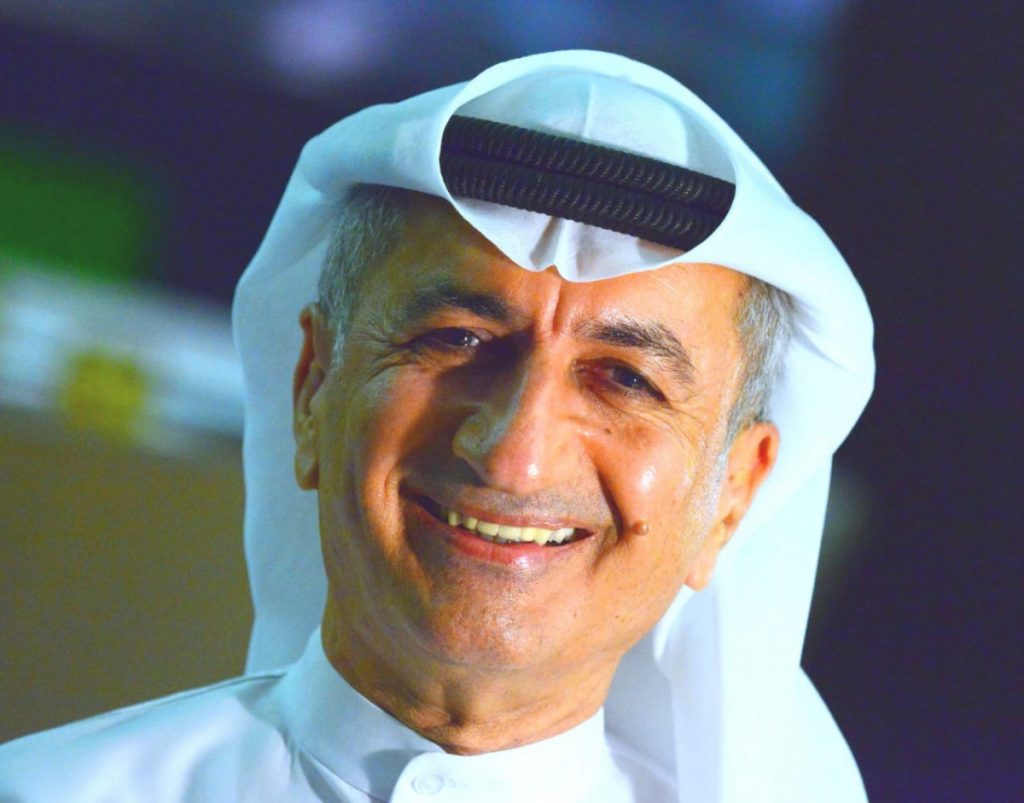
Down Memory Lane with Artist Rukni
Among the art community in the UAE, Rukni is a familiar name. Often spotted at exhibitions and events, the 63-year-old Emirati artist, who officially goes by the name Ahmad Al Awadhi is a connoisseur, patron and practitioner of art. A businessman by day, Rukni’s evenings are spent inaugurating art events and supporting budding artists.
As an artist, he is equally adept at landscapes and portraits, even as his current stream of work veers toward pop art. Apart from several exhibitions that he has showcased his work at, he is now collaborating with First Wish Art Gallery for a roving international art exhibition, that will travel to 12 countries. In this conversation with Middle East Masala, he looks back at the artistic inspirations that culminated into his oeuvre.

The Beginning
I always had an interest in art. At the age of eight, I was sketching palm trees and made portraits, but I never thought of pursuing art as a career. My father used to run a novelty store of gift items in Sharjah and by the time I was 16, I was actively part of the family business. Only around two decades ago, when I was around 40, a friend happened to visit my home and see my artwork. Her encouragement and appreciation led me to display them. That’s how I first publicly made a foray into the art world with an exhibition in Al Mamzar.
Art Style
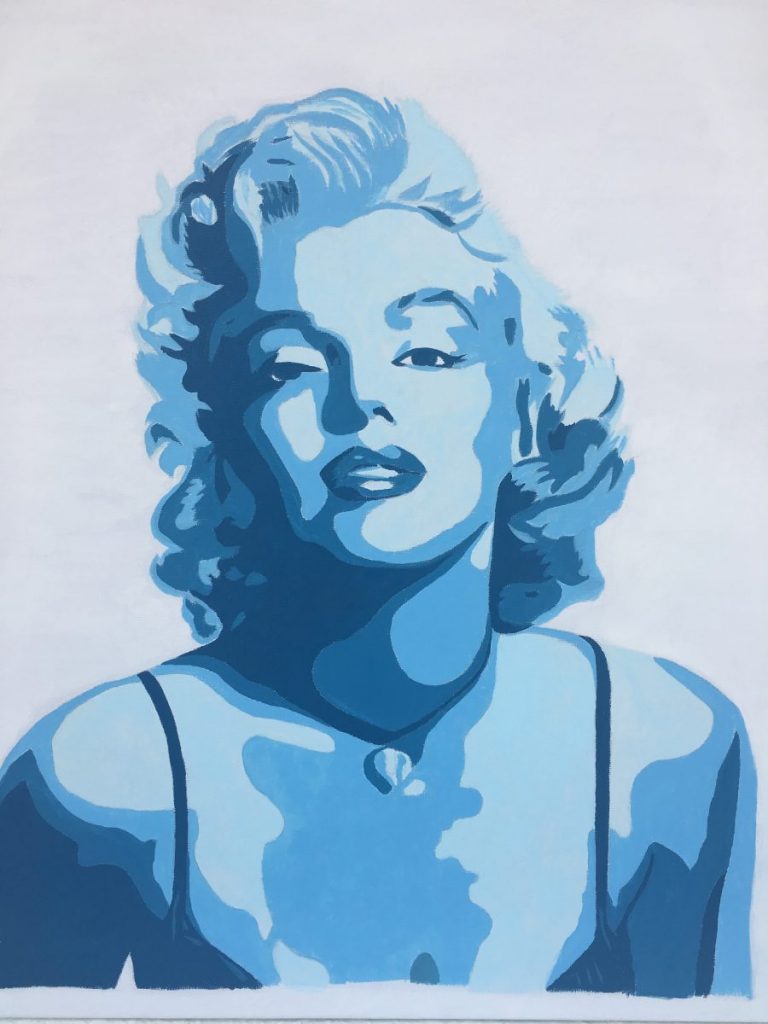
When I started painting, initially I would sketch what I saw around me — the traditional architecture of our bayts, the arches and doors, coffee pots, lanterns, mosques and desert scenes. But now I am more into portraits of legends that I paint in a pop art style. From Frida Kahlo to Sophia Loren, Al Pacino, Marilyn Monroe, Elvis Presley, Gandhi and Sheikh Zayed, I have etched them all. I closely watch their movies, flip through magazines and TV shows to get my portraits right. I usually paint very late at night, while listening to classical music. I can get deeply engrossed and sometimes spend the whole night painting.

Inspiration
Art is everything to me. I am entirely self-taught. When I started painting in my childhood, it was not appreciated. Now, of course, the scenario has changed, things are different. I receive a lot of love and respect from everyone. It’s important for me to preserve and present shades of my country and culture, which are intrinsic to me as an Emirati. Through my work, I hope that people will see the beauty of my nation.
The portraits that I make are an extension of my admiration for these iconic personalities. One of my most cherished art portraits is that of Pope Francis and the Grand Iman of Al Azhar, Ahmed el Tayeb, when they met in Abu Dhabi as part of UAE’s Year of Tolerance, 2019. That painting now adorns the walls of the office of the Ministry of Tolerance.
UAE’s Art Scene
In the UAE, we are fortunate to have the presence of several cultures intermingling. Artists from various parts of the world are based here. We can see elements of their culture in their artwork. I am inspired by the people I meet and their work. Young people have a lot more freedom to pursue what they want these days. They also have the encouragement of the UAE government. My own daughter has followed in my footsteps and is working with Louvre Abu Dhabi.
To Upcoming Artists
It is important to try various styles of art and figure out what one is excellent at. It should then become your forte, your specialization so that you can have your own signature style.
A multi-faceted artist, Petra Kaltenbach, fuses technology, graphic design, videography and fine art to create new-age contemporary art. Deeply perceptive and intuitive, she paints from a place of inner consciousness to portray the unseen on her canvas.
Born in Duisburg, Germany in 1962, Petra, one of the co-curators of World Art Dubai, moved to the UAE in 2004. Her new home in a rapidly changing city, then became a catalyst for her fascination with the theme of transformation. Captivated by the strength of the human spirit to break free from restricted psychological conditions into freedom and peace, she infuses a dose of optimism in her artworks. The pomegranate is a recurring motif on her canvas. As a symbol of transformation, for her, it is a divine fruit, that unites the east and the west and represents love, beauty, health and wealth.
Today she is known for her intertwined art — blending QR codes, UV printing technology with fine art. More recently, she has ventured into using augmented reality to combine videos into physical art and also taken on to work on mirrored stainless steel sheets. Jumping on the NFT bandwagon, she has just released her latest series called NFT_Love Letters. Ahead of World Art Dubai (Mar 16 to 19, 2022), she speaks to Middleeastmasala on her creative process.

Tell us about your new series, the NFT_LOVE LETTERS.
NFT_LOVE LETTERS, is a series of visual poems. They begin life as physical artworks painted and partially printed on mirrored stainless steel and then they take on their digital life with overlaid corresponding videos. The videos are transliterated Arabic terms of endearment, such as NUUR AIYNI_the light of my eyes, ALBI_my heart or ASAAL_Sweet like honey, engaging with the deep romanticism of the Arabic culture. I have used bright colours and a rush of patterns to create these visual love poems, which are a modern day ode to the timeless language of love.
From advertising to graphic design, to full time art and now curation — how did you transition from one field to the other? Or do you marry all your roles through your art?
Initially, I thought graphic design and art were very close. However, that was a mistake. While in graphic design, others define the rules, within which you have to be creative, in art you make your own. It’s a huge process. It’s a transformation that I am still undergoing.
With the big art movement of digitalization, graphic design is suddenly entering art. I call myself a hybrid artist, which means an artist who still creates physical works and videos to go with them. I have been doing this since 2015, and my physical work always consists of painted and printed pieces. The printed parts I create on the computer, when the graphic designer in me comes into play. These files, I then, print with the help of a UV-flatbed-printer on my painted artworks. It is quite a complex process.
I got my master’s degree in visual communication, which includes studying art history, colour theory, painting, photography, design theory, graphic design, and more. I have been working as a creative for 35 years, which has led me into curation that aids me to help shape the local cultural landscape and to be part of the making of great art history in the region. And, yes I do marry all my roles through my art.

You have had a long collaboration with Canon, where you incorporate their UV printing technology into your paintings. Tell us about this unique technique and can other budding artists learn it?
Anyone can learn Canon printing technology. It’s like learning a new painting technique. The secret is always in mastering the technique or technology and what you do with it. Canon had already talked to many other artists, but was not convinced by their works.
I was in a sponsorship programme with Canon for a year because I use their UV printing technology in a very unique way. I was the only artist in the world to receive the one year Canon sponsorship in 2017.
How did your 2004 move to Dubai reflect in your art?
My art became much more colourful and I started to deal with transformation, because the constant Dubai-buzz with all its changes clearly has something to do with transformation.
In addition, living with all the different nationalities urged me to see the world in a more colourful and diverse way. Naturally, I started to explore the UAE artistically and to discover similarities between the country and myself and to represent them in my art.
As the co-curator of World Art Dubai, one of the most anticipated art events in the UAE, how do you feel the event has evolved over the years and what can visitors look forward to in 2022?
Despite the pandemic, our curatorial team managed to get World Art Dubai off to a really good start. Since 2019, we have been consistently raising the level of art on display and creating a wonderful community event that systematically removes the fear of contact with art. We have a very good mix of emerging artists, mid-career artists and galleries. On top of that, every year we present art attractions to the visitors – this year we will show, among others, internationally renowned artists who have even made art especially for WAD. It is really one of our strengths that we have the artists themselves at the fair – this creates a very vibrant atmosphere.
#dubaiartist, nft, nftart, petrakaltenbach, worldartdubai. curatorinterview
Painting outdoors in the lap of nature by the sea or in a garden was an integral aspect of Dubai based Pakistani artist Soraya Sikander’s art routine. But the pandemic forced her to change that — months of being indoors in 2020, led her to rewire her painting process, which eventually resulted in her creating a new series exploring frescoes, inherent to techniques prevalent in the Indian subcontinent. Inspired by Mughal murals, Pahari paintings and Islamic architecture across Punjab and Sindh in Pakistan, Soraya etched motifs and patterns on handmade paper, resembling frescoes from these regions. She hopes to hold an exhibition of her artwork, later this year.
An alumnus of University College London’s Slade Summer School, the artist has to her credit numerous solo and group exhibitions across the globe. In this interview with Middle East Masala, she reveals more about her new fresco series and also talks about her pioneering calligraphy landscapes.

Your new art series explores fresco paintings. Tell us more about them.
I am fascinated by Mughal fresco paintings, their Naqqashi, miniatures, their geometrical patterns, Islamic arts and traditional handmade crafts. The fresco paintings practiced during the 16th and 17th century in the subcontinent, displayed a high amount of precision and perfectionism. Artists were commissioned to produce these Darbar (court) paintings and frescoes by Mughal emperors. These painters went on to produce masterpieces, that live on even now. I believe great art is made in solitude and produced through years of training, reflecting a perfect collaboration of style, skill and concept.
With rampant digitisation, we risk future generations being completely untrained in academic art and ignorant of formalist art. The fact that such art is timeless and transcends borders, has further inspired me to take this legacy forward. I hope to execute large scale frescoes and mural painting one day at heritage sites, for all people to experience in times to come.
Arabic calligraphy inspired landscapes have been a dominant feature of your work. How and what inspired you to create them?
In 2012, while traveling across Europe one autumn, I noticed the trees shedding their leaves. This natural phenomenon became a metaphor for me and led me to see Arabic calligraphy letters and alphabets in nature, particularly the letters Alif Lam and Kaf. I then created a few stylized illustrated sketches. My earlier paintings captured the beautiful English countryside interlaced with calligraphic patterns and rhythms. I ended up developing a new style that combined British romanticism with Eastern calligraphy to birth a new genre of painting, dubbed by art critics as the ‘calligraphy landscape’. This went on to win me much critical acclaim, biennale exhibitions, museum displays and sold out art work. It perhaps remains, my best known signature style.

Take us back to the start and evolution of your art journey. What have been the most significant milestones in your career?
I started with painting organic patterns that I found in nature in 2010. The details and designs in flowers caught my eye, and I enjoyed playing with colour. As the scale of my canvases grew, the subject shifted to tonal paintings of the beach, and textured seascape paintings of waves. I worked with palette knifes during this period. The work naturally progressed on to large scale depictions of the seasons, reflecting my new style of calligraphic silhouette trees against dramatic backgrounds, rich in tonal gradations.
The calligraphy landscape was an instant hit with collectors and went on to define my art career for the larger part of the decade. Perhaps some of my most well-known milestones were at the Beijing Biennale, 2017 and 2019. My exhibition ‘Embassy Art’ at Netherland’s leading gallery Patries Van Dorst, the recent showing in Moldova at their National Art Museum and being invited to be a TEDx speaker on Art have been other notable achievements. Over the years my work has been widely featured in major publications and hugely recognized.
How do you view the art scene in the UAE? Do you feel there are enough opportunities and representation of artists from the subcontinent here?
The UAE is one of the most fascinating, diverse, experimental and innovative countries in the world. There are opportunities constantly being created here and the pandemic has brought its share of unique art projects. Just like the nation, the UAE art scene, is constantly evolving rapidly. But given how large a population from South Asia lives here, we need more South Asian art galleries, museums, art organizations, a dedicated research centre and above all, quality fine art training institutes to teach Pahari miniature paintings, Rajasthani miniatures, Fresco paintings, Naqqashi, Kashi Kari, and all other traditional and formal arts from South Asia. I hope to launch such a school in the UAE one day.

Painting versus teaching or exhibiting at an event — what do you enjoy the most?
I enjoy each. I love the very act of painting, creating and inventing, discovering and experimenting, making and unmaking – the process, materials, textures and responding to the environment – the world around me, and interpreting it through light and shade. Painting, by its very nature is unlimited. It has no beginning, and no end. It is a continuous process.
Exhibitions are a great way of sharing experiences and telling stories through pictures. I see exhibitions as a way to connect with people and to show them new perspectives and possibilities.
Teaching too is incredibly rewarding. Creating awareness, sharing information, enriching people’s lives, engaging them in conversations, educating them nudging them to form their own ideas about artworks, training them to be deeply informed about art history of the world. As an art educator, it is immensely satisfying when my students attain personal and professional success.
#artistinterview, #dubaiartgallery, #dubaiartist, #fresco, #frescoartist, #pakistaniartistdubai, #sorayasikander
Walking along the historic Ajman Heritage District — the current venue of the Al Murabbaa Arts Festival — is akin to stepping inside a giant, bright bubble bustling with creativity. With local and international artists, sculptors and photographers showcasing several aspects of their craft, the festival, on till November 6th, 2021, is a haven of great talent and unique ideas.
The event opened to the public in a glittering ceremony on October 28th, 2021, inaugurated by H.R.H. Sheikh Ammar bin Humaid Al Nuaimi, Crown Prince of Ajman. Following the festival’s logo ‘Inspired by Yesterday to Imagine Tomorrow’, Iranian artist Mahnaz Karimi presents three exquisite resin art installations. Titled — ‘Dance of Parnian’, ‘Queen of Sheba’ and ‘Burnt City Mirror’ — her work entwines elements from ancient Middle Eastern tales curated with a contemporary outlook, mixing resin, fabric and alcohol ink.
Set against the backdrop of the Al Murabbaa Fort and Watchtower, Mahnaz’s installations have been garnering viewers attention. Recipient of the Bronze A Design Award 2020 in Arts, Crafts and Design category, Mahnaz specialises in resin art terming her artistic methods unorthodox, yet rooted in Middle Eastern culture. “The theme of Al Murabbaa Arts Festival matches the concept behind my new art series. Since stories behind art are so important to me I am elated to be part of this festival and for the opportunity to showcase my art in the UAE,” says Mahnaz.
One of her installations on display is – ‘Dance of Parnian’, created in her signature multiple resin bowl style, assembled together to create an eye-catching experience for the viewer. “My art is primarily based upon pouring which means applying the paint by pouring rather than with paint and brush. This sense of fluidity, along with the unpredictable nature of resin, gives me the opportunity to explore varied textures found in nature more realistically than any other medium,” says Mahnaz.

In ‘Dance of Parnian’, the artist has taken inspiration from the lightness of Persian origin Parnian silk. Using alcohol ink in shades of turquoise, navy and ocean blue, she has created a constellation of resin bowls depicting the ease of flowing silk and the fluidity of blowing wind. Taking the artistic responsibility of preserving ancient tales and age-old fabrics, Mahnaz’s next two installations take cue from history and culture.
In ‘Burnt City Mirror’, Mahnaz uses Sistan carpet fabric with resin and mirror symbolising the meshing together of the past and the present. The title of the installation pays homage to Shahr-e-Shukhteh, (The Burnt City in Persia), a UNESCO World Heritage site located in Sistan and Baluchistan province in Iran. Sistan is also famous for carpets that date back two thousand years. “I have tried to merge the worlds of classical and contemporary art, evoking in my viewers the depth and feelings that they can experience by connecting to our past,” she shares.

The creative process behind this installation, according to the artist, includes choosing patterns from hand woven carpets, printing them on fabric and then covering them with resin.
In her other equally stunning artwork, ‘Queen of Sheba’, a pair of almond shaped brown eyes, look at the world from behind the veil of a Sistan fabric resin creation. “Here, I have tried to use the flying carpet as a metaphor for love and compassion. I took inspiration from the legendary tale of the Queen of Sheba and the magic carpet she sent as a token of love to King Solomon,” she reveals.

Born in 1984 in Tehran, Mahnaz was drawn towards art during her teenage years. After completing a Bachelor’s Degree in Graphics from Alzahra University in Tehran, she acquired mastery over glass painting and abstract resin art. “Resin has a fluid soul, that allows me to delve deep into my inner creativity to sculpt dynamic forms and textures. Now at the Al Murabba Festival, I feel I have the best platform to grow, develop and display my art,” says Mahnaz.
#ajmnatourims, #almurabbaaartsfestival, #dubaiart, #iranianartist, #mahnazkarimi, #resinart, #sistancarpets
Emirati photographer, artist and communication designer Hussain Al Moosawi, 37, spent a significant part of his childhood visiting his grandmother, who lived near the Al Fahidi area in Bur Dubai. Closely constructed and densely populated the buildings around Al Fahidi left an impact on young Hussain’s mind. Years later, after living in Australia, when he moved back to the UAE, he embarked on a unique photography project capturing facades of old classical architecture styles in buildings in the UAE.
His aim was to focus on design to create an archive of standardised images comparing the architectural styles and influences in the UAE with symmetry as a unifying element. His photographs have been showcased in several exhibitions. Hussain began his facade project with well-known towers such as the Deira Tower in Baniyas Square, the Dubai World Trade Centre, Liwa Tower in Abu Dhabi among others. He has now started including newer buildings as well and hopes to click low-rises and villas. In this interview with middleeastmasala he shares his thoughts on choosing a façade for the project, his inspiration, influences and vision.
What inspired you to document old building facades in the UAE?
Documenting architecture stemmed from my quest of trying to make sense of space. Since 2010, I have been systematically documenting details of the urban environment around me. It started when I developed a series of typologies living in Melbourne, Australia. When I came back to the UAE in 2013 – after spending eight years in Australia, I saw a new urban environment that was shaped by the real estate boom. It took me a while to train my eye to see what is unique about the UAE. I undertook a number of projects that focused on mundane subjects, which eventually resulted in me looking at larger structures that happen to have a greater public interest. To sum it up, it’s less of an inspiration and more of a gradual and logical result that followed a series of interconnected patterns.
What, according to you, is the relationship between human beings and the spaces they live in. Why is it important to reflect on them?
Spaces affect us to a great degree, but we also influence them at a far greater level. This is particularly true with vernacular architecture, which you don’t simply observe but inhabit and influence. These structures are nothing but a reflection of our socio-economic state and entail many details that speak of our human nature and living conditions.

What are the important characteristics of your facade project. Share with us the patterns and design elements that you have captured?
I think it’s too soon to highlight patterns. Given that my scope is the entire UAE, there might be patterns that repeat themselves nationwide, and others specific to an emirate, city or neighbourhood. I might be able to highlight these patterns once the collection matures after five years. However, I think I would give this mission to architects who have greater insights on architectural forms and a body of knowledge that help in identifying these patterns. My primary role is to document methodologically, which is a time-consuming process. Though speaking of clear patterns, architecture from the 70s and 80s is more harmonised with the local and regional context. This was a result of policies to some degree. The other reason was architects themselves, who came from the region – whether it was the Arab world or the Indian subcontinent.
How do you choose a facade for your project?
Many buildings I photographed happened to be already appreciated among architects and enthusiasts, so they had to be definitely included. However, most of what I photograph is a result of surveying areas and following my visual intuition in identifying what is worthy to be photographed. To narrow my scope, I have started photographing symmetrical facades, but now I am chasing asymmetry too. At this stage I am mainly photographing towers and high-rise buildings, then I will slowly steer my attention towards low-rises. However, I always make sure to photograph a building once I come to know it might be demolished.
To produce a good photograph of a particular facade, you need to identify the 10-15 time window when it’s best photographed. This is achieved by using conventional apps that show you the angle of the sun at a given place and time, but you also have to be present on the site to see the reflection of light from the building. It’s all about having the balance between having enough reflection to show a degree of colour, but subtle enough to avoid strong shadows that take away from the architectural forms.

How long have you been photographing and what do you eventually plan to do with them?
I have been on this project for the last three years and I can see myself doing this for another decade at least. My eventual aim is to build a pictorial and interactive archive of facades and make it available to the public, with the functionality to organise these buildings according to different criteria such as-built year, location, nationality of architect and so on. Naturally, I am also looking at compiling the collection into a series of publications.
How did visiting your grandmother in Al Fahidi contribute to this unique project, share your childhood memories around the area?
Having lived a large part of my childhood in Bur Dubai, contributed to my fascination with the dense built environment. Most Emirati kids have memories playing in open sand areas, I cannot say that about myself. Perhaps, at a subconscious level, this affected my fascination with buildings. I cannot say I share an equal level of love for villas, which seclude you to some degree from your immediate surroundings.

What has been the response from old and young residents of UAE to your project. Have they shared any interesting stories around these buildings?
Most of the response I get is from millennials who experience a sense of nostalgia when looking at older buildings. Many residents – specially from Abu Dhabi – shared how such buildings reminded them of their childhood, when these buildings used to constitute Abu Dhabi’s central business district before the construction of shopping malls and the development of newer areas.
#buildingsdubai, #Hugraphy, #hussainalmoosawi, #olddubaibuildings
“Wouldn’t it be wonderful if we could all be a little more gentle with each other, and a little more loving, have a little more empathy, and maybe we’d like each other a little bit more.” This beautiful quote by actress Judy Garland from the book Little Girl Lost, perfectly captures the essence of empathy. It is also the starting note of author Mimi Nicklin’s book ‘Softening the Edge’ centered around building empathy at the workplace. An experienced marketer and communications strategist, and host of the ‘Empathy for Breakfast’ show and the ‘Secrets of The Gap’ podcast, Mimi believes that without being able to walk in the shoes of others, without understanding diverse viewpoints, it is nearly impossible to inspire and lead teams to success.
Having lived and worked in London, Hong Kong, Singapore, Cape Town, Havana, Madrid, Johannesburg and Dubai, Mimi has studied cultures from within 25 global markets. In her book she approaches how empathy in organisations can not only change the business environment but also shape the whole world.

Empathetic influence, says Mimi, is this decade’s most critical human and scientifically validated skillset. In this interview she shares her views on how empathy can change the future, positively impact leadership and close the empathy gap that affects the world.
What is empathy to you?
It is the ability to recognise and respond to the reality, emotions, or pain of others, to put yourself into their place, to understand their context and to see the world as they do.
You write that empathy is contagious, how do you support that?
Imagine watching your friend walk up to her car. She unlocks it remotely and slides in with her eyes on her phone. She is distracted. Somehow as she pulls the door shut she firmly slams her fingers in the car door, crushing her little finger and ripping the nail away from the skin. She screams out as blood begins to pour. Did you flinch? Or close your fist around your little finger reactively? The odds are, you probably did. Every time I re-read this my hands still curl in. This is empathy in action!
Why is it so important and what is its significance at the workplace especially during COVID-19?
In many a crisis, opportunity is found. Across the globe today, people are looking for inspiration, for authentic-connected leadership more than ever before. There is much discussion about the need for greater levels of emotional intelligence, humanity, and empathy. The world has now seen things in a new light, and our shared humanity is more important than ever.
Without doubt, the socio-economic impact of COVID-19 will long outlast the health impact, and it is in the leverage of emotional intelligence, and specifically empathy, that organisations and teams will be able to rebuild. The conversation about empathetic influence and conscientious leadership was relevant before the virus swept our planet. Now it is critical.
How will Softening the Edge help corporate professionals to build empathy?
The book addresses the Global Empathy Deficit from within organisations. It is inspired by the turnaround story of the organisation I ran during the time of writing. The book focuses on the point where humanism and capitalism meet. The goal is to create a wider understanding that the world of leadership and business is critically responsible for playing a role in protecting and improving our social future. Softening the Edge will help leaders understand the value of empathy, how to activate it and how it can create strength in teams, in competitive positioning and even in earning profit.
In a world where people are increasingly glued to their gadgets, how do they build connections with other human beings?
People often think that tech stops us from empathising with each other, but this isn’t true. We can embrace technology. Only we need to ensure that when we put tech between us and our families, especially over geographical distances during Covid, we keep our eyes on each other, our shoulders square to the screen and we lean in physically towards the person we are talking to. This will create subconscious signs of connectivity and empathy, even when separated by technology.
How did empathy change your life?
The truth is that I never thought about becoming an author until I wrote Softening the Edge, but once I identified the reach and impact of the Empathy Deficit globally and started to write, I couldn’t stop. I became an author because of that passion – my study of empathy literally changed my life’s outlook. I feel that this book wrote me, rather than the other way around. Softening the Edge focuses on something I have been passionate about for my entire career—the sustainable wellness of our workforce, treating people with kindness and decency, and the future of effective leadership that sustainably promotes human values as well as the financial value of every business.
How early on in your life did you discover empathy?
I have been naturally empathetic my whole life but in the summer of 2018 I sat with a business coach who asked me a question that changed the way I saw the world forever. She encouraged me to consider reframing my leadership intuition (an approach I had been comfortable with for many years) instead to leadership ‘empathy.’ This made me realise I had been doing this naturally for a very long period of time but I hadn’t put a name to it. This provocation began years of studying the academics and power of empathy and to the discovery of the depth and reach of the Empathy Deficit in our society.
Who inspires you and who, according to you, is the beacon of empathy at the workplace today?
The leaders who are embracing this concept are the ones who inspire me the most because they are making waves and creating teams of loyal, fulfilled employees who stand the test of time. President Obama, Oprah Winfrey, Simon Sinek (writer and thought leader), Jacinda Ardern (Prime Minister of New Zealand), Satya Nadella (CEO Microsoft), John Mackey (CEO Whole Foods) are all leaders who are committed to listening and understanding their teams first and foremost.
#empathy, #empathydeficit, #miminicklin, #softeningtheedge
Vibrant, ancient and detailed – are some of the synonyms that describe Phad paintings of Rajasthan, India. Made on a long piece of cloth or canvas called Phad, these paintings depict heroic folk tales of local deities – Pabuji and Devnarayan. The stories on these scroll paintings were inspired from mythological books and were used as mobile temples. Dubai-based phad artist Smita Aloni has been ardently creating this rare and fast dwindling art form for over two decades. She has exhibited her collection of paintings at various art spaces around the world; conducted workshops and taught students. In this interview she speaks about her association with this unique art form and the process behind its creation.

What is the cultural significance of Phad art? Take us back to its historic roots?
Phad art originated around 700 years ago in the Bhilwara region in Rajasthan. These miniature paintings made on scrolls called Phad convey stories of valour of a local king during those times called Pabuji. The phad cloth is used as a visual aid for mobile temples that nomadic tribesmen travelled with while singing songs and narrating stories of Pabuji’s bravery. Usually a priest — Bhopa and his wife Bhopi — would sing these mythological hymns. They used to commission artists from the Joshi family to make the Phad art. Shree Lal Joshi and his son Kalyan are earnestly carrying on this traditional art form to date.
How did you get associated with Phad art?
In 2001 I got an opportunity to witness a phad painting being made by award-winning artist and my guru Kalyan Joshi. I was intensely attracted to the colour and style of the painting and instantly decided to learn and pursue this art form. I consider myself still a student forever uncovering various facets of these paintings.

Tell us about the unique artistic format of Phad painting, materials used and style of art?
Phad art follows a unique style. From the canvas to the traditional colours everything is made by the artist. For the canvas a white cotton cloth is soaked overnight in cold water and kept for drying during the morning. While it is still moist, it is dipped into a homemade starch solution (made from flour and water) and then left to dry in bright sunlight. The cloth is then stretched and one part of it is polished with smooth glass to produce a shiny texture. Once this canvas is ironed from the opposite end it is ready to be painted on.
All the colors that we use are natural and derived from stones such as red clay to make the colour brown and indigo for blue. Due to non-availability of natural stones and colours we now also paint with synthetic colours. Creating a phad painting takes years of practice and patience. It’s important to also have a steady hand in line drawing.

Share with us a repertoire of your work and artistic milestones?
My journey with Phad art has seen a steady growth in the last two decades. I developed my artistic skills not only by actively painting and practising the art but also by teaching art in schools. While living in Qatar, from 2001 to 2017, I participated in various exhibitions and workshops. Dubai too offers a fantastic platform to artists. In a short period of time being in Dubai since 2018 I have participated in several exhibitions including World Art in 2019 and the Hotel Show, 2019. I have received a great response for my Phad paintings from the artist community in Dubai. One of my biggest milestones was representing Phad on the international platform at the Pechakucha Art Festival, Doha, in 2005. The response to my art at this festival was phenomenal.
Did you always train to be an artist? What does art mean to you?
I have done post graduation in chemistry and had not trained to become an artist. But right from my childhood I was inclined towards painting and drawing. My mother was very supportive and encouraged me in my creative pursuits. Art for me an expression of myself and the me-time that I spent doing what I am passionate about.
What has been your most memorable artistic experience to date?
That would be when I participated in the ArtShopping Expo exhibition in Louvre, Paris in 2019. I received an amazing response from art lovers, fellow painters, curators and art critics for my paintings.
Where are the challenges in keeping this art form alive and what are your own professional plans?
Traditional Phad cloth is about five meters of scroll which is not affordable for most buyers. It is also difficult to display it, so now it is available in smaller sizes. To keep this tradition alive is our responsibility. I do it by practising the art, by teaching it to the younger generations and also by supporting local craftsmen by buying phad art. As today there are several cheaper options for art available people tend to sway towards them forgetting that such handmade art represents our valuable culture. So, in future I plan to tie-up with craftsmen, who engage in handmade traditional crafts to help them sustain their skills and livelihood.
Take us through a day in your life?
My day is almost the same, follows a routine, except when I am travelling, sounds quite boring but I like it that way. I wake up early around 4: 45 am to walk my dog, to do yoga and pranayama. Besides cooking I love gardening along with my cat and dog pottering around. I have also recently started learning Hindustani classical music, so I practice that every day religiously and of course painting on phad is the most essential part of my day.
More about Smita and her work on her website: https://www.smitaaloni.com/
#dubaiart, #dubaiartist, #phadart, #phadartdubai, #phadartist, #phadartistdubai, #smitaaloni
Driving through the scenic roads of Fujairah on family holidays Sadaqat Pervaiz often stopped enroute to admire the historic Al Bidiya Mosque. The diminutive rock and mud structure known as the oldest existing house of worship in the emirates held a special place in his heart. Over the years he captured its rustic charm by clicking innumerable pictures till the artist in him decided to pay the ultimate ode to his muse with strokes of paint on a canvas.
The allure of portraying a slice of the bygone era through his art led him to paint a number of historical sites of the UAE. Curated as part of his Heritage Collection these paintings will be showcased in his upcoming solo art exhibition – Back to Basics – at Gallery 76 in Dubai International Art Centre from June 22 to 29, 2019. Forty incredible artworks from Sadaqat’s collection will be on display. Besides Al Bidiya five other heritage sites are part of the exhibition. These include the Al Bastakiya Mosque, which was first established at the end of the 19th century by textile and pearl merchants, the Al-Hayl Castle, once used as the headquarters for Fujairah’s ruling family, Al Jazirah Al Hamra — an old abandoned town in Ras Al Khaimah considered by experts to be one of the best places to study traditional coral-stone architecture, the Khor Kalba Village and the iconic RAF Sharjah

Well known as a celebrated landscape artist in his native Pakistan, Sadaqat has lived in the UAE for over two decades. A deep appreciation of the local culture and the untouched nature of the historical sites of the UAE inspired Sadaqat to paint them. “It was almost like stepping back in time and that feeling is what I hoped to convey through my paintings. There is no shortage of inspiration in the UAE as all the seven emirates have a wealth of historic sites.”
He believes in using art as a form of documentation to preserve culture and history. “History is a bridge to the past and art is a bridge to connecting with people. Both leave you feeling like you have learned something valuable with a new appreciation and outlook towards life,” says Sadaqat.
Photography is an integral part of his artistic process. “Often the journey begins when I hear about a site from someone or find it over the Internet. After I drive to the location, I carefully examine the details and take several shots of the forts and castles from different angles. Unfortunately, as much as I would like to most of the places do not have conditions that permit one to paint on site. So, the photos I click become the premise for most of my paintings,” he says.

Through his art he hopes to draw attention to the incredible historical restoration work done in the UAE. Most of all, he wants to ignite a desire in people to visit some of these locations, to learn more about them and then share their experiences.

Born in 1956 in Wazirabad, Pakistan, Sadaqat grew up in an art inspired environment. His father, a government officer, was also a water colour artist. This early encouragement led him to pursue a formal art education in the National College of Arts in Lahore. Under the mentorship of a famous landscape artist Sadaqat developed a distinct personal style.
But family circumstances paved way for him to move to Sharjah in 1991. Soon after he took on the job of an art director at the Expo Centre in Sharjah. For the next 18 years he spear headed the formation of the company’s first art department. It was only when both his children completed their education he felt it was time to go back to art.
Water colours and oil paints are his preferred medium today. “Sometimes I like to experiment with charcoals, chalk and coloured paper. But most of my landscapes are in water colour and some of my portraits are in charcoal and chalk,” he points out.
Back to Basics is Sadaqat’s first solo exhibition in Dubai at DIAC from June 22 to 29, 2019.
#albidiyamosque, #aljazraalhamra, #BacktoBasics, #backtobasicsexhibition, #bastakiya, #DIAC, #dubaiartist, #emiratesheritageart, #fortsofUAE, #historyUAE, #landscapearist, #paintings, #Sadaqatpervaiz, #watercolour
Bold illustrations showcasing contemporary and culturally-inspired designs is the forte of Emirati artist Khalid Mezaina’s work. Centered around local traditions his art largely includes hand-drawn elements. He has a Bachelor’s degree in visual communication from American University of Sharjah and a Master’s in textiles from Rhode Island School of Design, USA. Khalid is an independent artist, illustrator and graphic designer, who has participated in several exhibitions and has some iconic projects to his credit. In 2016, he was commissioned by ADMAF (Abu Dhabi Music and Arts Foundation) to create a series of illustrations called cafeterias of the UAE, depicting a slice of the vibrant shawarma shops and cafeteria culture in the emirates. At Jam Jar, in Al Serkal Avenue, he presented a project on talismans. With Sharjah Art Foundation he curated a workshop called Tapestries exploring the trends and history of tapestries in Sharjah’s old textile souk. From illustrating the walls of a music store in a mall to his textile project on wearable capes Khalid’s artistic vision is diverse and deeply personal.
At the recent Ramadan Flow Talk series Khalid shared his work and his thoughts on what went behind their creation. Here is an excerpt from the interview he gave me for middleeastmasala.
What does art mean to you?
I think art is about having something to say and also speaking to anyone out there that shares the same sentiments as you.
How would you describe your style of work?
I would describe my style of work as illustrative. I illustrate things that I see, things that interest me or things that I would like to talk about.
Is there a common artistic thread that we can find in your designs?
I like to incorporate something hand drawn in all my work. Everything starts as a hand drawing which is then scanned and enhanced digitally. Be it an artwork for exhibition purpose, a design for a pattern layout, or work for a client — everything starts with a hand drawing in my sketchbook.

Do you feel it’s time we broke stereotypical representations of the region in art — for instance the overuse of lanterns and camels?
There is a common tendency to appropriate or recycle stereotypical visuals to depict the region. For it to be less predictable, I think the challenge is figuring out a way to use these common motifs and imagery in a fresh way. I personally do not mind the use of certain imagery that is a direct representation of the culture or region we’re in. I just think what makes something stand out is not copying something that’s already been done before.
How do you represent iconic cultural motifs of the Emirates through your art?
I create work that represents my experiences of belonging to the Emirates. I try to create visuals that are contemporary and relevant to the times so that my work does not look redundant or appear to be similar to what something someone has seen before. Artists do tend to fall in this trap where they use certain motifs the same way. I hope my use of cultural motifs represent a different perspective that is based on my understanding of what it means to be from the Emirates, which can be a unique take compared to others.

Take us through the journey of documenting the designing of the ‘cafeterias of the UAE’ project that you did for Abu Dhabi Music and Art foundation in 2016. ‘Cafeterias of the UAE’ was an illustration series for ADMAF’s 2016 exhibition ‘Portrait of a Nation’. The exhibit showcased different perspectives of the United Arab Emirates through the works of the selected artists. I thought a perfect idea to represent the Emirates was through the cafeterias found all over the country. Emiratis, expats and everyone in between flock to these cafeterias daily for an affordable sandwich, a humorously titled juice, or a plastic cup of sugared, steaming hot chai. These cafeterias are iconic structures in the UAE’s cultural and urban landscape. The final result was a series of six illustrated cafeterias that caught my attention as I drove around finding them.

What are your favourite cafeterias in town — any childhood memories that make them special?
I do not have a favourite cafeteria. But the word cafeteria instantly brings a flood of memories from high school and university days, when my friends and I would walk or drive to one close by after classes, to get a quick (affordable) bite to eat and chat together.
What are your current projects?
In the lead up to summer, I am trying to take things easy. It has been a year since I moved back home after completing my master’s and I have been mainly occupied with commissioned work and client based projects. Now I would like to be playful in the studio to experiment and work on projects for myself. I am currently completing a couple of client based illustrations including a mini comic with a friend. I am also scheduled to teach a series of workshops for young creatives at Tashkeel and Jameel Arts Centre in Dubai and at Warehouse 421 in Abu Dhabi.
Lastly, what do you want people to take away from your art?
Honestly, at the end of the day, I hope the audience would relate to my work in some way. I hope it would make people connect to the stories or narratives conveyed through them, they would relate to the messages shared, and feel happy and positive.
Khalid blogs at http://khalidmezaina.blogspot.com/. His brand Krossbreed has a range of t-shirts, prints and stationary.
#alserkal, #cafeteriasofuae, #cafeuae, #dubaiartist, #emiratiartistinterview, #illustratordubai, #khalidmezaina, #krossbreed, #tashkeel, #windtowersdubai