

 By
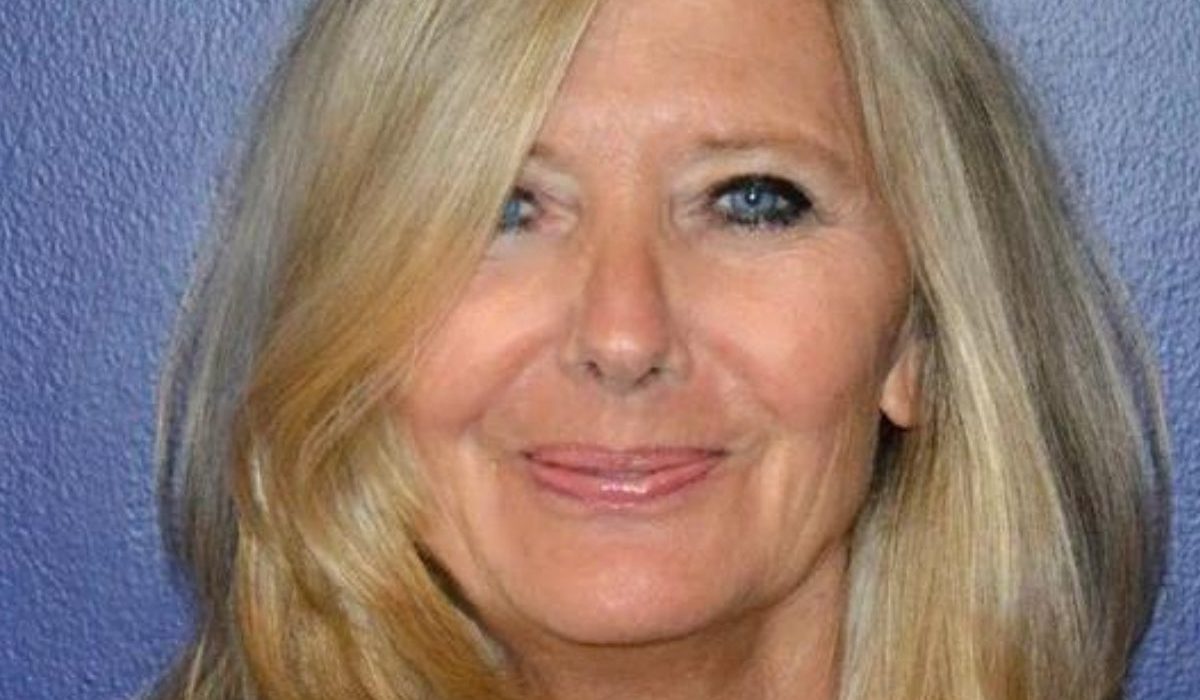
By A multi-faceted artist, Petra Kaltenbach, fuses technology, graphic design, videography and fine art to create new-age contemporary art. Deeply perceptive and intuitive, she paints from a place of inner consciousness to portray the unseen on her canvas.
Born in Duisburg, Germany in 1962, Petra, one of the co-curators of World Art Dubai, moved to the UAE in 2004. Her new home in a rapidly changing city, then became a catalyst for her fascination with the theme of transformation. Captivated by the strength of the human spirit to break free from restricted psychological conditions into freedom and peace, she infuses a dose of optimism in her artworks. The pomegranate is a recurring motif on her canvas. As a symbol of transformation, for her, it is a divine fruit, that unites the east and the west and represents love, beauty, health and wealth.
Today she is known for her intertwined art — blending QR codes, UV printing technology with fine art. More recently, she has ventured into using augmented reality to combine videos into physical art and also taken on to work on mirrored stainless steel sheets. Jumping on the NFT bandwagon, she has just released her latest series called NFT_Love Letters. Ahead of World Art Dubai (Mar 16 to 19, 2022), she speaks to Middleeastmasala on her creative process.

Tell us about your new series, the NFT_LOVE LETTERS.
NFT_LOVE LETTERS, is a series of visual poems. They begin life as physical artworks painted and partially printed on mirrored stainless steel and then they take on their digital life with overlaid corresponding videos. The videos are transliterated Arabic terms of endearment, such as NUUR AIYNI_the light of my eyes, ALBI_my heart or ASAAL_Sweet like honey, engaging with the deep romanticism of the Arabic culture. I have used bright colours and a rush of patterns to create these visual love poems, which are a modern day ode to the timeless language of love.
From advertising to graphic design, to full time art and now curation — how did you transition from one field to the other? Or do you marry all your roles through your art?
Initially, I thought graphic design and art were very close. However, that was a mistake. While in graphic design, others define the rules, within which you have to be creative, in art you make your own. It’s a huge process. It’s a transformation that I am still undergoing.
With the big art movement of digitalization, graphic design is suddenly entering art. I call myself a hybrid artist, which means an artist who still creates physical works and videos to go with them. I have been doing this since 2015, and my physical work always consists of painted and printed pieces. The printed parts I create on the computer, when the graphic designer in me comes into play. These files, I then, print with the help of a UV-flatbed-printer on my painted artworks. It is quite a complex process.
I got my master’s degree in visual communication, which includes studying art history, colour theory, painting, photography, design theory, graphic design, and more. I have been working as a creative for 35 years, which has led me into curation that aids me to help shape the local cultural landscape and to be part of the making of great art history in the region. And, yes I do marry all my roles through my art.

You have had a long collaboration with Canon, where you incorporate their UV printing technology into your paintings. Tell us about this unique technique and can other budding artists learn it?
Anyone can learn Canon printing technology. It’s like learning a new painting technique. The secret is always in mastering the technique or technology and what you do with it. Canon had already talked to many other artists, but was not convinced by their works.
I was in a sponsorship programme with Canon for a year because I use their UV printing technology in a very unique way. I was the only artist in the world to receive the one year Canon sponsorship in 2017.
How did your 2004 move to Dubai reflect in your art?
My art became much more colourful and I started to deal with transformation, because the constant Dubai-buzz with all its changes clearly has something to do with transformation.
In addition, living with all the different nationalities urged me to see the world in a more colourful and diverse way. Naturally, I started to explore the UAE artistically and to discover similarities between the country and myself and to represent them in my art.
As the co-curator of World Art Dubai, one of the most anticipated art events in the UAE, how do you feel the event has evolved over the years and what can visitors look forward to in 2022?
Despite the pandemic, our curatorial team managed to get World Art Dubai off to a really good start. Since 2019, we have been consistently raising the level of art on display and creating a wonderful community event that systematically removes the fear of contact with art. We have a very good mix of emerging artists, mid-career artists and galleries. On top of that, every year we present art attractions to the visitors – this year we will show, among others, internationally renowned artists who have even made art especially for WAD. It is really one of our strengths that we have the artists themselves at the fair – this creates a very vibrant atmosphere.
#dubaiartist, nft, nftart, petrakaltenbach, worldartdubai. curatorinterview