

 By
By On a Trail of Damask Roses in Oman
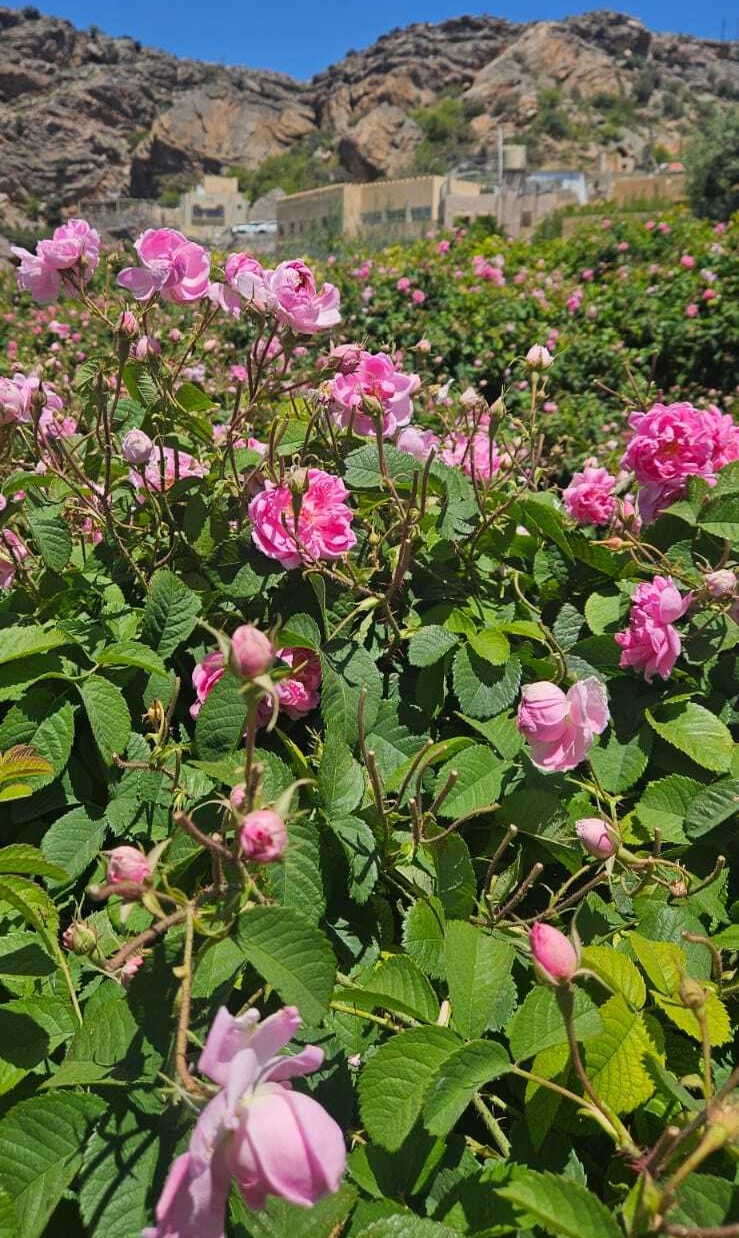
The sweet fragrance of pink Damask roses linger on all through spring on the green mountains of Jabal Akhdar, in Oman. From mid-March to mid-May, the terraced farms on these rugged mountains turn into shades of pink as the roses bloom. Local Omanis and tourists flock to Jabal Akhdar during this season to experience the famed beauty of the highly-scented Mohammadi roses, grown in Saudi Arabia, Iran and Oman.
The roses thrive at an altitude of over 2,000 metres on the Saiq plateau and in the traditional villages of Al Ayn, Al Aqur and Wadi Bani Habib, where families engaged in their cultivation, hand-pick them to make some of the world’s purest rose water, skincare and aromatherapy products.

Travellers get to walk through the narrow terraced gardens, pick baskets full of roses and experience traditional and modern techniques of rose water distillation. Oman is known for deserts and souks, but Jabal Akhdar’s rose culture is sustainable, community-led tourism at its best.
Part of the Al Hajar mountain range, Jabal Akhdar is a steep climb up, from the neighbouring town of Nizwa, the mountain roads are suitable only for four wheel (4×4) drives. This protected nature reserve is also called the fruit bowl of Oman. Lush with seasonal produce all through the year, the terraced farms here thrive with pomegranates, apricots, walnuts and peaches. And in spring, the Damask roses take over the farms, thorny bushes of soft pink petalled flowers make a captivating contrast on these verdant peaks.

Farm tour, a multi-sensory experience
There are several farms around the area that are open for tourist to explore including Bait Asarh, Dehjan Chalet and Al Jabal Roses. Tours begin early in the day. Once you park your car at the outskirts of these farm, and you would need to walk through narrow stony lanes in the village. While entry to some of the farms is free, there is a fee for rose plucking. Interestingly, the harvested petals are handed back to the farms as a sustainable practice to be used in their factories.
At the entrance visitors are greeted with tiaras made of fresh roses and empty straw baskets to collect the flowers. The view all around the farms is breath-taking, thick bushes covered with beautiful pink blooms surrounded by the Hajar mountains and a soft fragrance emanating from the flowers makes this an impressive sensory experience. Farmers typically begin hand picking the blossoms at dawn just before sunrise when the fragrance and oil content are most concentrated before the days heat evaporates the dew. For us visitors it takes practice and a few unpleasant scratches from the thorny brushes to learn the delicate art of plucking roses.
As the farms are spread across several square metres, navigating through their uneven jagged pathways laden with rocks and narrow streams prove to be a challenging balancing act. Along with the tourists, we spot several Omanis visiting the farms, the men distinct in their pristine white Thobes and coloured turbans and the women in floral Abayas and matching head scarfs. With our baskets full of roses we head to the rose factory to understand the distillation process.

Inside rose distillation factory
Omani rose water is treasured for its smoky aroma that is cultured through the traditional distillation methods at the rose factory. Attendants at the factory demonstrate the ancient technique of rose water distillation, where freshly collected petals are placed in clay pots called Burmah, that are then kept in traditional mud ovens called Al Duhjan. When the hot embers inside the oven cool down, the rising steam from the petals condenses on the copper lid covering the Burmah, the dripping residue is collected in a vessel. Through this traditional method, the rose water collected has a brown smoky aroma.

These plants also have modern distillation techniques where the process is faster and the rose water collected is clearer with fewer impurities. The extracted rose water is used for several skincare and aromatherapy products, in essential oils and for flavouring dates, Omani Qahwa (coffee), meat dishes and sweets. Rose water and oil are integral part of Omani culture, frequently used in homes and mosques. At weddings and at religious events, rose water is sprinkled at the end of a meal. It is also used to make perfumes and supplied to luxury perfume factories.
As part of the tour is the Qahwa tasting and rose date sampling. Sitting on patterned Omani carpets in the factory’s majlis, while sipping the aromatic Qahwa and savouring the dates, the scenic views of the rose gardens and fragrant mountain air, add a whimsical touch to this unique Middle Eastern travel experience.