

 By
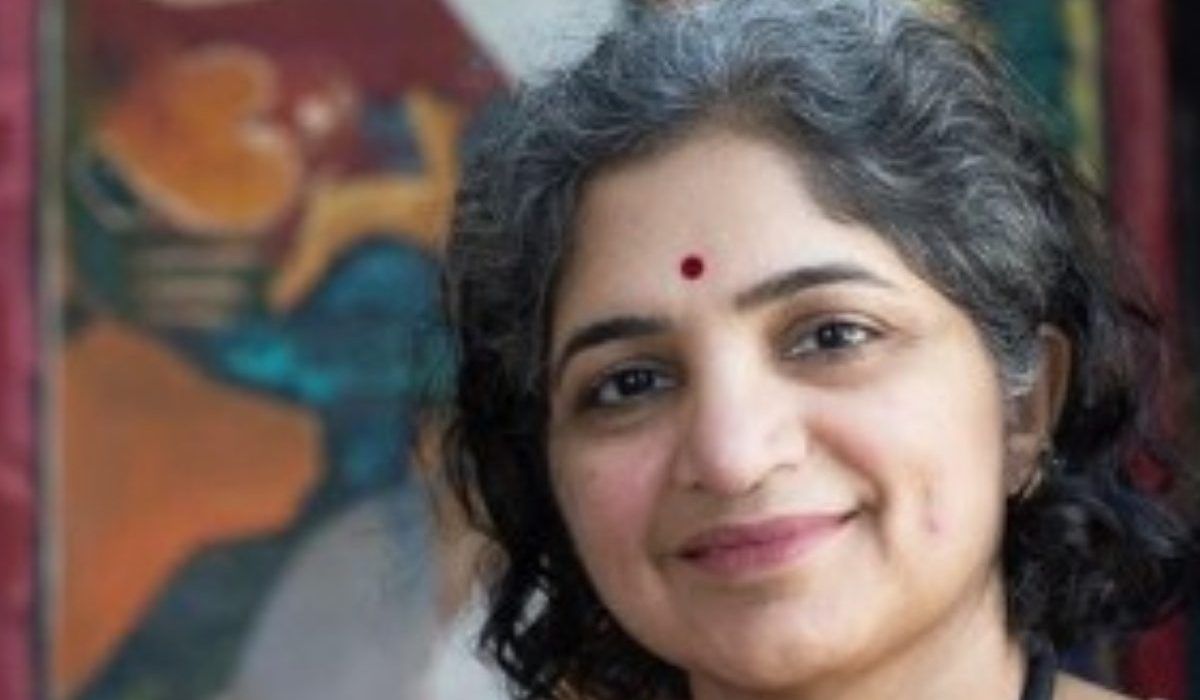
By Vibrant, ancient and detailed – are some of the synonyms that describe Phad paintings of Rajasthan, India. Made on a long piece of cloth or canvas called Phad, these paintings depict heroic folk tales of local deities – Pabuji and Devnarayan. The stories on these scroll paintings were inspired from mythological books and were used as mobile temples. Dubai-based phad artist Smita Aloni has been ardently creating this rare and fast dwindling art form for over two decades. She has exhibited her collection of paintings at various art spaces around the world; conducted workshops and taught students. In this interview she speaks about her association with this unique art form and the process behind its creation.

What is the cultural significance of Phad art? Take us back to its historic roots?
Phad art originated around 700 years ago in the Bhilwara region in Rajasthan. These miniature paintings made on scrolls called Phad convey stories of valour of a local king during those times called Pabuji. The phad cloth is used as a visual aid for mobile temples that nomadic tribesmen travelled with while singing songs and narrating stories of Pabuji’s bravery. Usually a priest — Bhopa and his wife Bhopi — would sing these mythological hymns. They used to commission artists from the Joshi family to make the Phad art. Shree Lal Joshi and his son Kalyan are earnestly carrying on this traditional art form to date.
How did you get associated with Phad art?
In 2001 I got an opportunity to witness a phad painting being made by award-winning artist and my guru Kalyan Joshi. I was intensely attracted to the colour and style of the painting and instantly decided to learn and pursue this art form. I consider myself still a student forever uncovering various facets of these paintings.

Tell us about the unique artistic format of Phad painting, materials used and style of art?
Phad art follows a unique style. From the canvas to the traditional colours everything is made by the artist. For the canvas a white cotton cloth is soaked overnight in cold water and kept for drying during the morning. While it is still moist, it is dipped into a homemade starch solution (made from flour and water) and then left to dry in bright sunlight. The cloth is then stretched and one part of it is polished with smooth glass to produce a shiny texture. Once this canvas is ironed from the opposite end it is ready to be painted on.
All the colors that we use are natural and derived from stones such as red clay to make the colour brown and indigo for blue. Due to non-availability of natural stones and colours we now also paint with synthetic colours. Creating a phad painting takes years of practice and patience. It’s important to also have a steady hand in line drawing.

Share with us a repertoire of your work and artistic milestones?
My journey with Phad art has seen a steady growth in the last two decades. I developed my artistic skills not only by actively painting and practising the art but also by teaching art in schools. While living in Qatar, from 2001 to 2017, I participated in various exhibitions and workshops. Dubai too offers a fantastic platform to artists. In a short period of time being in Dubai since 2018 I have participated in several exhibitions including World Art in 2019 and the Hotel Show, 2019. I have received a great response for my Phad paintings from the artist community in Dubai. One of my biggest milestones was representing Phad on the international platform at the Pechakucha Art Festival, Doha, in 2005. The response to my art at this festival was phenomenal.
Did you always train to be an artist? What does art mean to you?
I have done post graduation in chemistry and had not trained to become an artist. But right from my childhood I was inclined towards painting and drawing. My mother was very supportive and encouraged me in my creative pursuits. Art for me an expression of myself and the me-time that I spent doing what I am passionate about.
What has been your most memorable artistic experience to date?
That would be when I participated in the ArtShopping Expo exhibition in Louvre, Paris in 2019. I received an amazing response from art lovers, fellow painters, curators and art critics for my paintings.
Where are the challenges in keeping this art form alive and what are your own professional plans?
Traditional Phad cloth is about five meters of scroll which is not affordable for most buyers. It is also difficult to display it, so now it is available in smaller sizes. To keep this tradition alive is our responsibility. I do it by practising the art, by teaching it to the younger generations and also by supporting local craftsmen by buying phad art. As today there are several cheaper options for art available people tend to sway towards them forgetting that such handmade art represents our valuable culture. So, in future I plan to tie-up with craftsmen, who engage in handmade traditional crafts to help them sustain their skills and livelihood.
Take us through a day in your life?
My day is almost the same, follows a routine, except when I am travelling, sounds quite boring but I like it that way. I wake up early around 4: 45 am to walk my dog, to do yoga and pranayama. Besides cooking I love gardening along with my cat and dog pottering around. I have also recently started learning Hindustani classical music, so I practice that every day religiously and of course painting on phad is the most essential part of my day.
More about Smita and her work on her website: https://www.smitaaloni.com/
#dubaiart, #dubaiartist, #phadart, #phadartdubai, #phadartist, #phadartistdubai, #smitaaloni