

 By
By View Picasso’s Magnificence at Louvre, Abu Dhabi
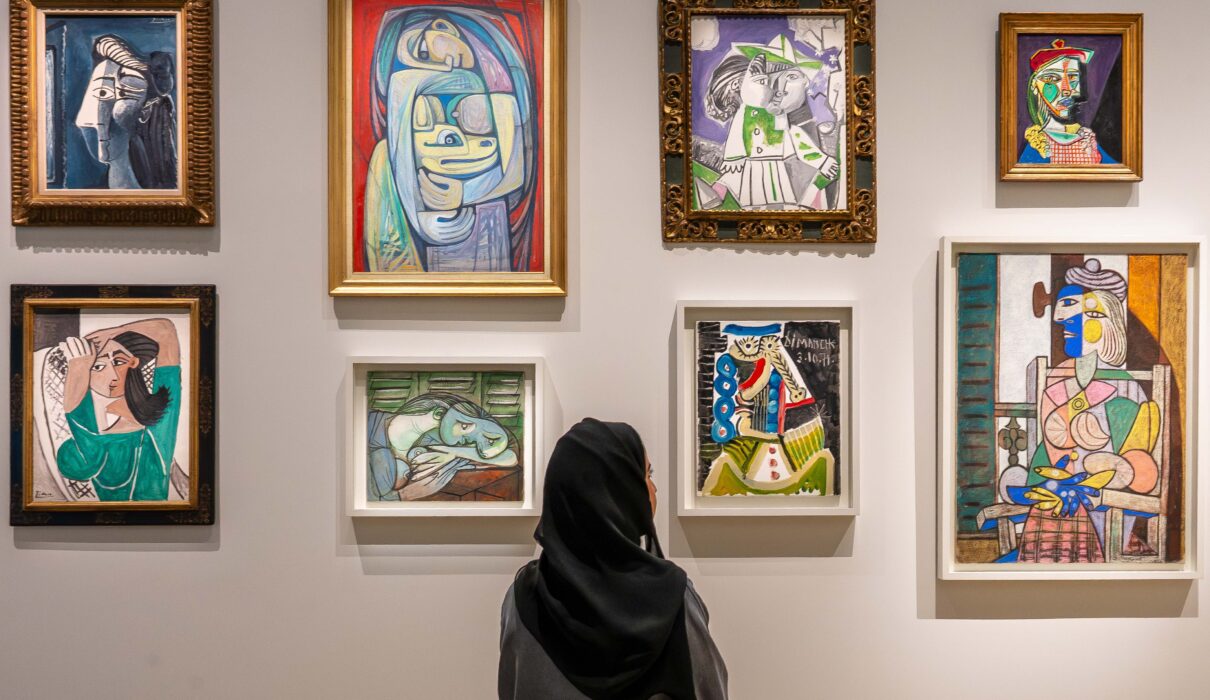
In 78 years of his artistic life, Pablo Picasso, created 100,000 prints and engravings, 34,000 illustrations, 13,500 paintings, 300 sculptures and poems. In his lifetime he mastered several art forms and co-founded the Cubist movement becoming one of the most influential artists of the 20th century. And now, you get to witness Picasso’s brilliance closer home, with a landmark exhibition at the Louvre, Abu Dhabi. ‘Picasso, the figure’ on view until May 31, 2026, features over 130 works of the maestro revealing the myths and forms behind his vision.
This exhibition at Louvre, Abu Dhabi is presented in collaboration with the Musee National Picasso-Paris, the only collection in the world that houses extensive artworks of Picasso donated by his heirs in 1979 and in 1990.

Tracing Picasso’s treatment of figuration, the exhibition chronicles his early experimentation with cubism to classical portraits, surrealist works and his bold late paintings. Visitors get to view a sequence from the film Le Mystère Picasso by French film director and screenwriter Henri-Georges Clouzot, which introduces the artist at work and sets the tone for the exploration of Picasso’s artistic evolution in modernity. Structured into five thematic sections, the exhibition connects Picasso’s formal evolution with enduring mythological archetypes. Early encounters with Catalan sculpture and African and Oceanic art shaped his radical simplifications of the body and the emergence of Cubism. A post-war return to classicism reveals his dialogue with the masters through refined portraits and idealised forms. The hybrid creatures of Surrealism, inspired by the Minotaur myth, expose Picasso’s fascination with metamorphosis and the psychological tensions within the figure. From the 1930s onward, his figures become more monumental and sculptural, echoing prehistoric idols and the emotional weight of conflict.
A pivotal moment in the exhibition juxtaposes Dora Maar’s photographs documenting the creation of Guernica with Iraqi artist Dia al-Azzawi’s Elegy to My Trapped City (2011), drawing parallels between their use of art as a tool for political commentary. The final section brings together Picasso’s late works, distinguished by bold colour, liberated line and multiple viewpoints, where musketeers, matadors and other archetypes reflect a return to his Spanish identity.

The exhibition also showcases six Arab modernists whose works engage directly with Picasso’s artistic legacy. Among them are paintings by Iraqi artists Dia al-Azzawi, Jewad Selim, and Shakir Hassan Al Said, in addition to Egyptian artist Ramses Younan. A painted ceramic work by the Algerian painter and ceramicist Baya Mahieddine is also showcased. Mahieddine’s 1947 exhibition at Galerie Maeght in Paris drew the attention of Surrealists and of Picasso himself, illustrating a reciprocal artistic exchange.
Complementing the exhibition, a calendar of community-focused programmes have been curated to enrich the visitor’s experience.