

 By
Kutubna Cultural Center Exhibition Documents Life and Art during Gulf Conflict
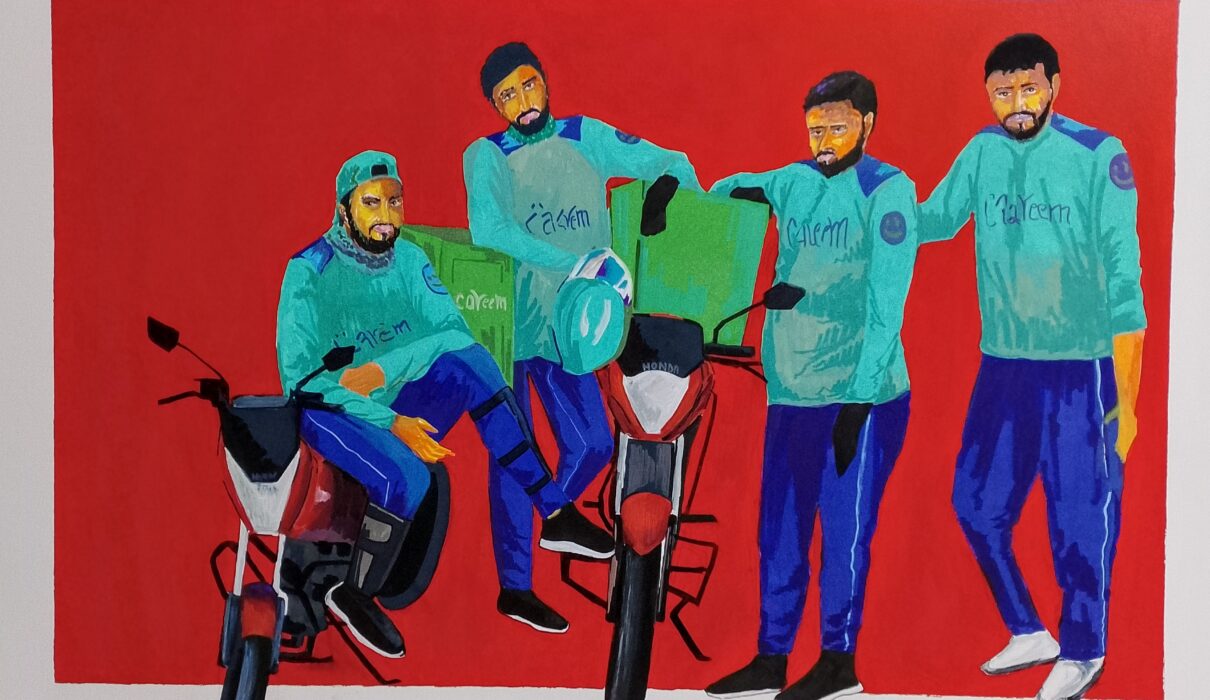
On April 2, 2026, loud sounds echoed across Dubai as UAE air defences intercepted missiles and drones during the US-Israel and Iran war. That day, like other Dubai residents, Pakistani artist Saira Safwan received alerts on her mobile phone urging people to stay safe during the attacks. But as she looked out of her home’s window in Liwan, she witnessed in quiet admiration, a line-up of delivery riders nonchalantly doing their duty.
Moved by their commitment to their work and the community, she captured this poignant moment on her canvas as a tribute to their tireless efforts in unpredictable conditions. Today, her painting is among 70 works featured in a ‘A Way Through: Archive of Resilience’ exhibition at Kutubna Cultural Center in Nadd Al Hamar, Dubai, bringing together creative responses to the recent war from across the Middle East.

The exhibition that opened on October 3, 2026 is part of an initiative to Document Culture in the Gulf in a Time of War, an oral history project centring the experiences of diverse people living in the Khaleej. Over 40 artists and contributors from various cultural backgrounds responded to an open call shared by Kutubna Cultural Center earlier this year. Participants are based in Bahrain, Kingdom of Saudi Arabia, Kuwait, Qatar and the United Arab Emirates, and together they represent more than 20 nationalities. The exhibition continues until December 7, 2026.
“When we first announced the initial call for volunteers to be part of the project “Documenting Culture in the Gulf in A Time of War,” the response was overwhelming. People were eager to share their stories and hear others’ experiences. The project was as much a way to process as it was a way to record,” says Dr Shatha Al Mutawa, founder of Kutubna Cultural Center and the initiator of the Resilience Archive oral history project.
An entire floor of the Cultural Center has come alive with journal entries, poems, short stories, embroidery pieces, crochet patterns, paintings, digital art and photographs, that capture myriads of ways in which people responded to how the war impacted them.
Emirati artist Dr Karima Al Shomely sketched a series of date and palm leaves inspired by how date farming continued in the emirates even during the uncertain times. Saudi artist Taghreed Albaqshi painted Flowers Grow from My Heart, reflecting on motherhood during war, with flowers growing from a mother’s heart as a symbol of life, resilience, and continuity despite destruction.
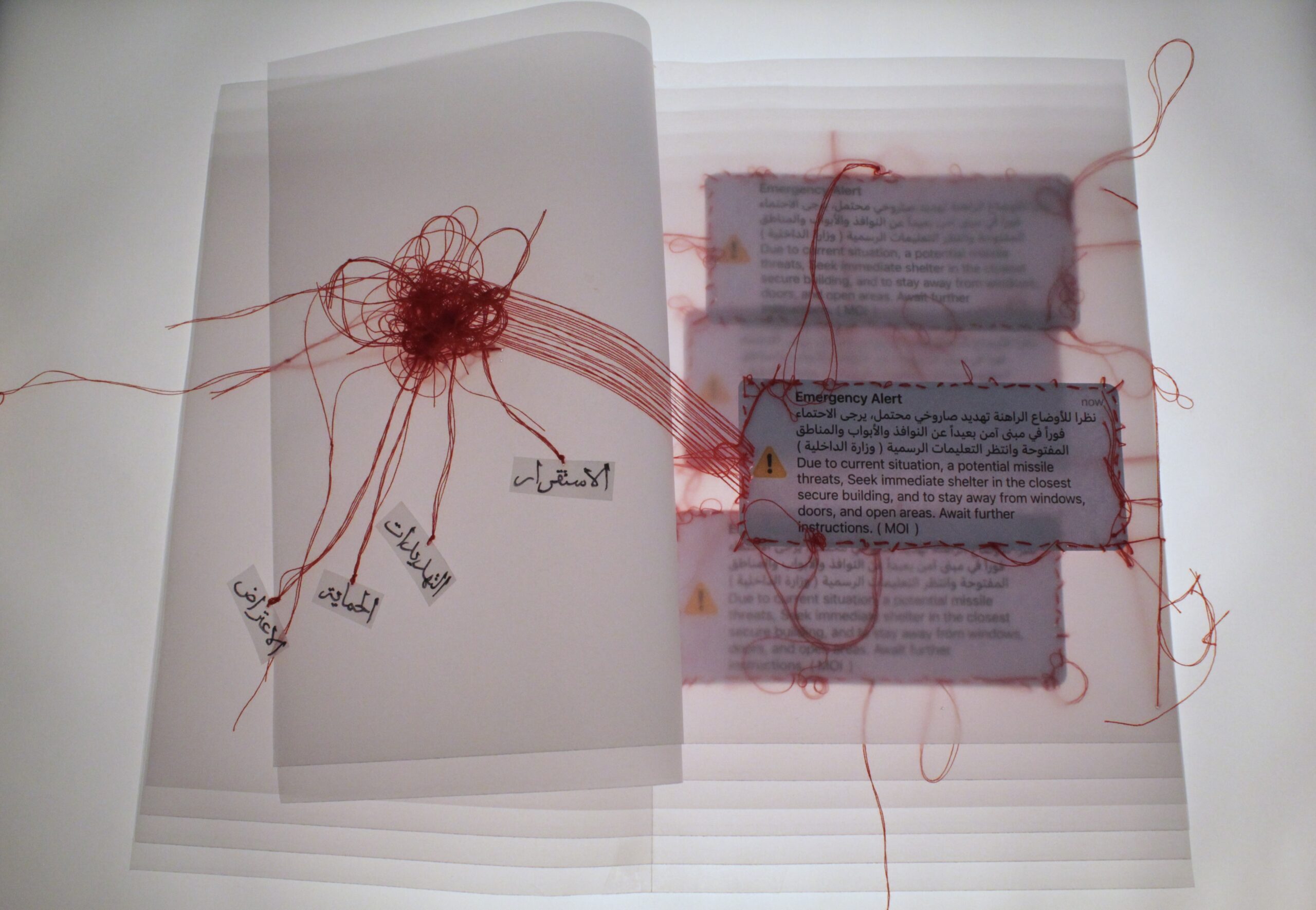
The exhibiting works highlight several universal human emotions including security, unity, faith, gratitude, and hope, while reflecting on moments of fear and uncertainty and a deeper connection to homes and families. UAE-based filmmaker and artist Hind Tukan’s The Notebook Kept Ringing: A Manual for Waiting is displayed as an open diary over a table on a lightbox. The book is filled with alerts and notifications, she received during the attacks, hand-stitched with a red thread, showing how public information became intertwined with her private thoughts and emotions. Suspended from the red thread are four recurring words handwritten in Arabic calligraphy: “Prosperity,” “Threats,” “Interception,” and “Protection.” “In the early days of the missile attacks several people felt that they were unable to continue their lives as they had before the war. Yet, they found a way forward, although a different one than before. These artworks, as well as the journal entries and poems, showcase how people found resilience during the war. On one hand they described feeling afraid but at the same time they believed they were safe as they witnessed UAE take care of its people and protect them in extraordinary ways,” shares Dr Al Mutawa, who is also a historian.
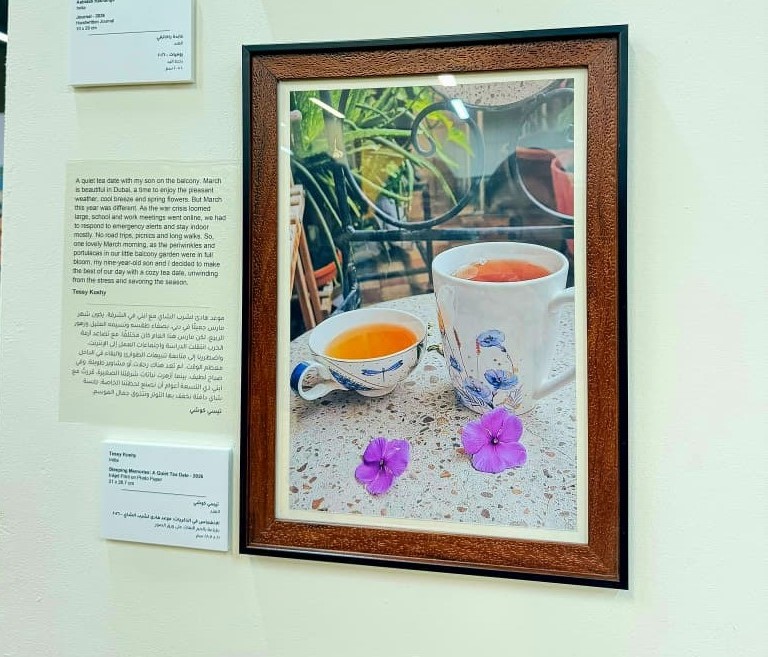
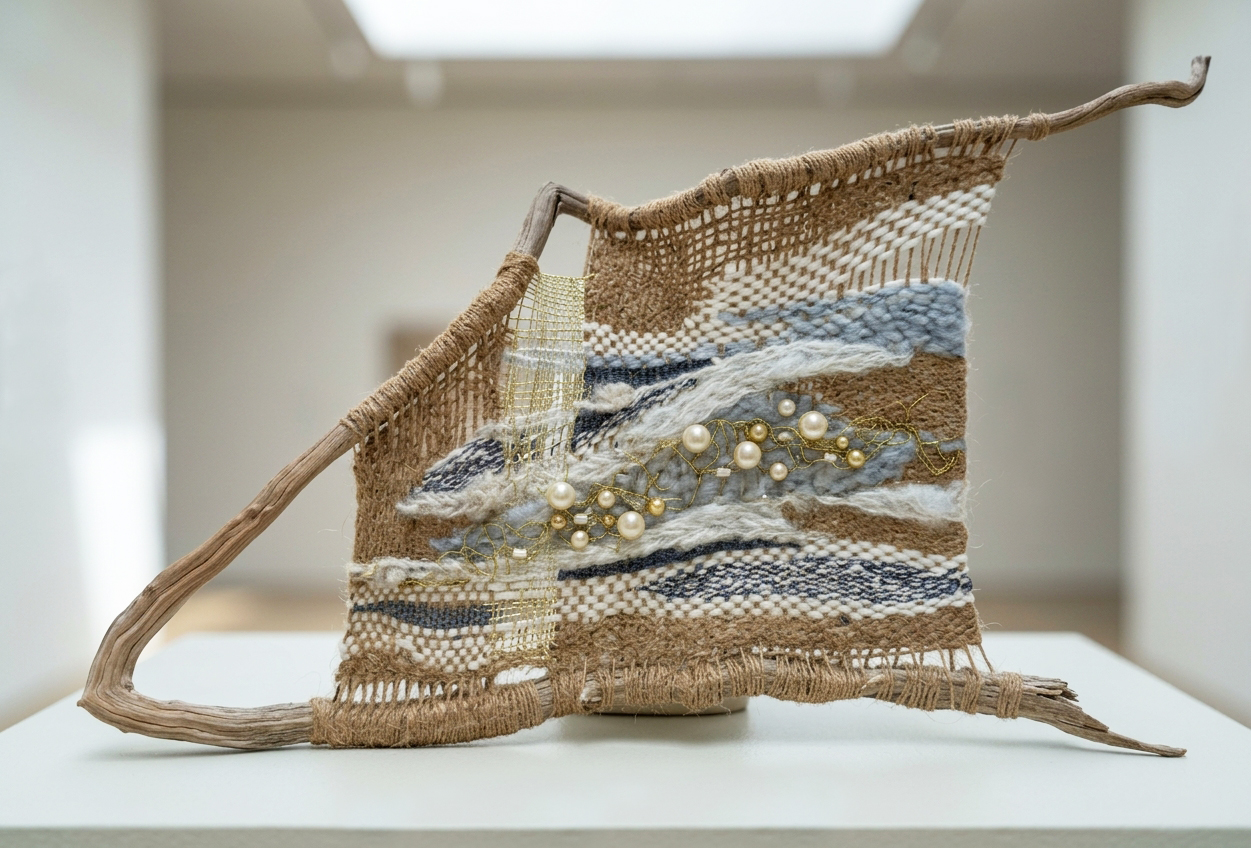
Several exhibiting works use powerful verses, metaphoric short stories, vibrant textiles, intertwined thread, and handmade art to translate the experience of conflict into a physical form. German artist Bettina Kulakowski weaved the irregular edges of a dried Ghaf branch, she found during a desert walk and created a unique textile piece titled — Thick Skin and Bitter Flesh — inspired by the words of Sheikh Mohamed bin Zayed Al Nahyan. Emirati poet Hessa Aldahel created an interactive artist’s book using stamp ink on tracing paper, recording the timestamps of missile warnings and events from February 28 to March 3, with numbers overlapping and turning across the pages to reflect the confusion and anxiety of those uncertain days. Journalist and editor of Middle East Masala, Tessy Koshy, captured the essence of safety and familiarity of our homes, through her short story — No Place Like Home. Her photograph Steeping Memories, A Quiet Tea Date, clicked on a winter afternoon in her balcony, during the conflict, acts as a reminder of savouring the small moments in our lives, even when the outside world feels like its falling apart.
The exhibition also includes contributions by three children, including four year old Taleb Saeed Shaiban, the youngest artist, whose painting, The Sound, responds to the explosions he heard during the attacks. For curator Nora Qudah, the community’s overwhelming response to the exhibition felt truly rewarding. “It was clear how profoundly visitors appreciated the artworks, especially the artist statements accompanying each piece. Many exhibits served as great conversation starters, and I heard visitors actively discussing their favourite poems and paintings. It was a genuinely heart-warming reception from the community.” The exhibition runs until December 7, 2026, at Kutubna Cultural Center in Nadd Al Hamar, Dubai.